L’Officina del teatro comprende un training fisico e vocale e un lavoro collettivo a partire da uno o più testi, che si sviluppa durante l’anno e viene mostrato in una rappresentazione – una “dimostrazione di lavoro” – all’inizio dell’estate.
The Theater Workshop includes physical and vocal training and collective work from one or more texts, which develops throughout the year and is shown in a performance-a “work demonstration”-at the beginning of the summer.
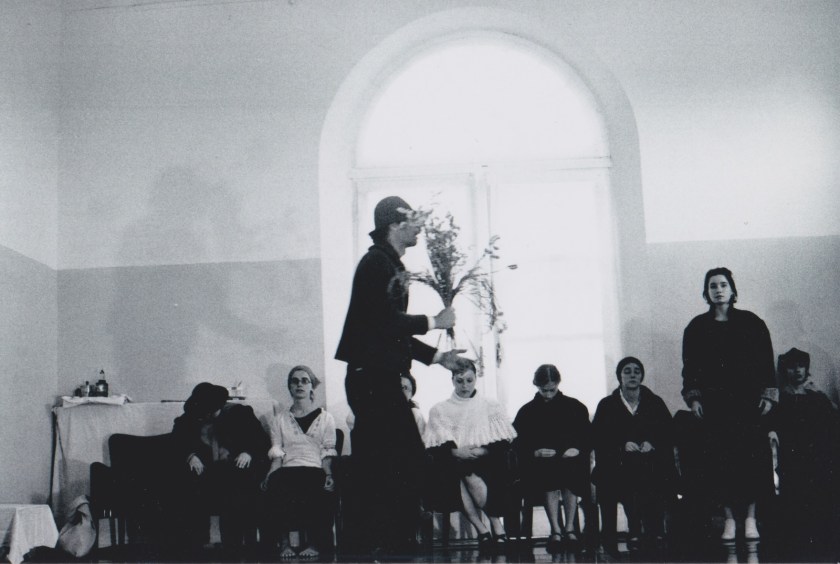
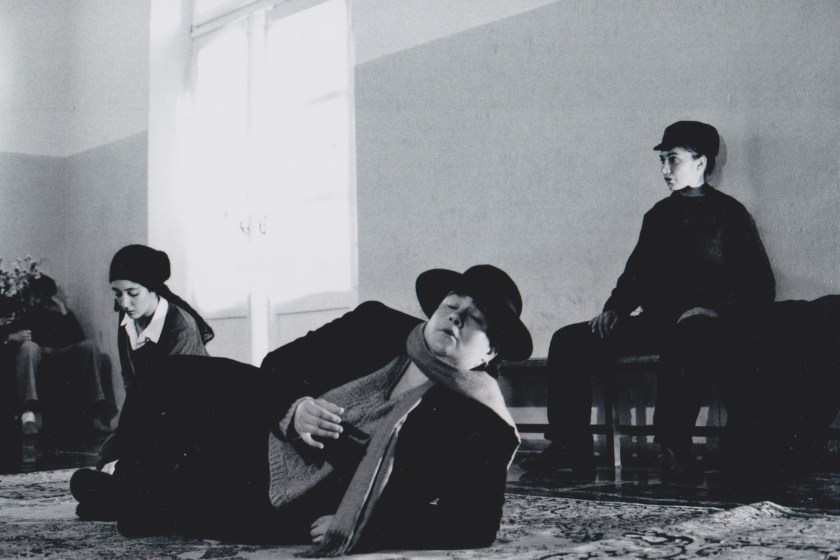
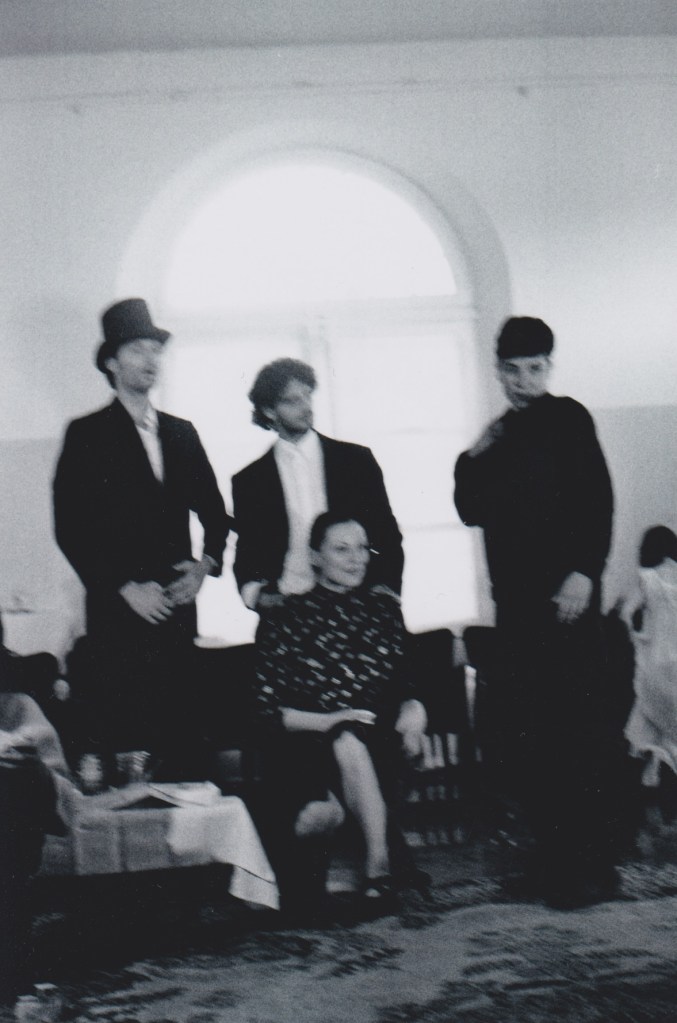
IL GIARDINO DEI CILIEGI
[THE CHERRY GARDEN]
2005/06
testo / texts Il giardino dei ciliegi di Anton Cechov
laboratorio condotto da / workshop led by Anne Zénour
il lavoro è stato presentato nel giugno 2006 alla Corte dei Miracoli (Siena)
con / with Valentina Chiefa,Luca Filannino, Marta Gabriel, Mariolina Ferri, Cristina De Simone, Céline Kraus, Michela Pepi, Giulia Romanin, Anna Teotti, Federica Testa,Benjamin Tixier, Tommaso Usberti

LA BALERA
[THE DANCE HALL]
2006/07
testo / text Cent’anni di solitudine di Gabriel Garcìa Marquez
laboratorio condotto da / workshop led by Massimiliano Balduzzi
il lavoro è stato presentato nel giugno 2007 alla Corte dei Miracoli (Siena)
con / with Elena Ambrosi, Laura Amodeo, Mario De Giorgis, Sara Due Torri, Marta Gabriel, Aurélia Risso, Federica Testa, Benjamin Tixier, Tommaso Usberti
RESISTENZA
[RESISTANCE]
2007/08
testo / text Conversazioni in Sicilia di Elio Vittorini
laboratorio condotto da / workshop led by Massimiliano Balduzzi
il lavoro è stato presentato nel giugno 2008 alla Corte dei Miracoli (Siena)
con / with Alberto Cannone, Roberta Ciccarelli, Mario De Giorgis, Samuel Fuscà, Carola Haupt, Francesco Mendicchio, Giulia Romanin, Federica Testa, Benjamin Tixier, Piero Usberti, Chiara Vesce
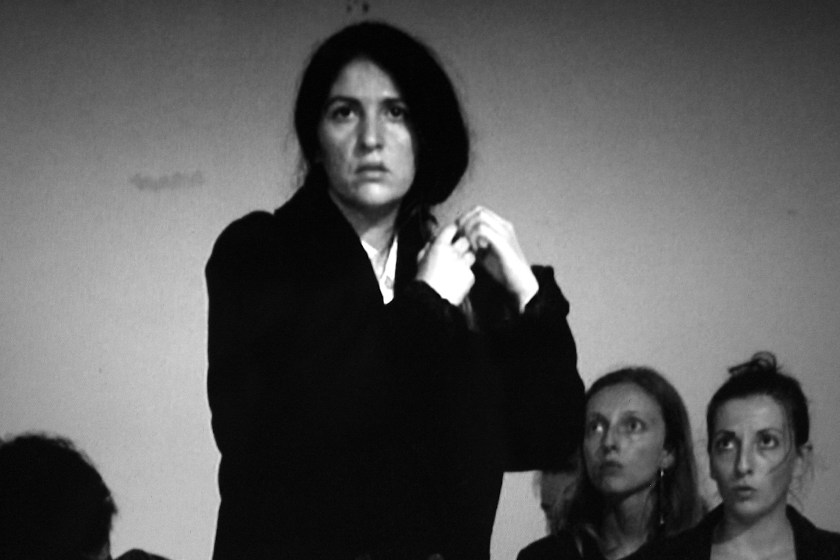
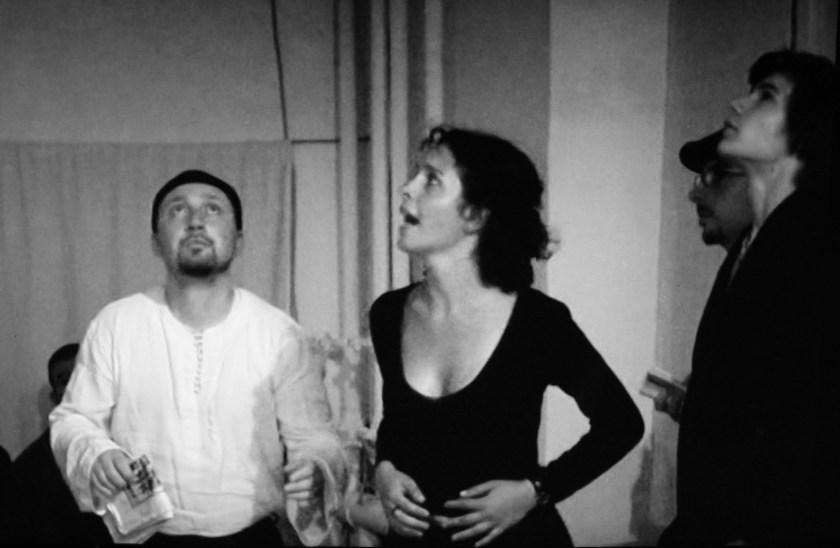
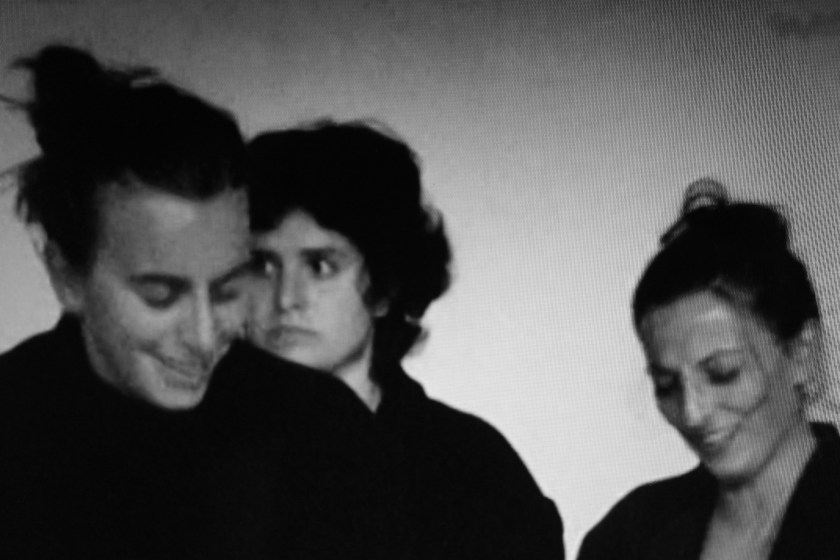
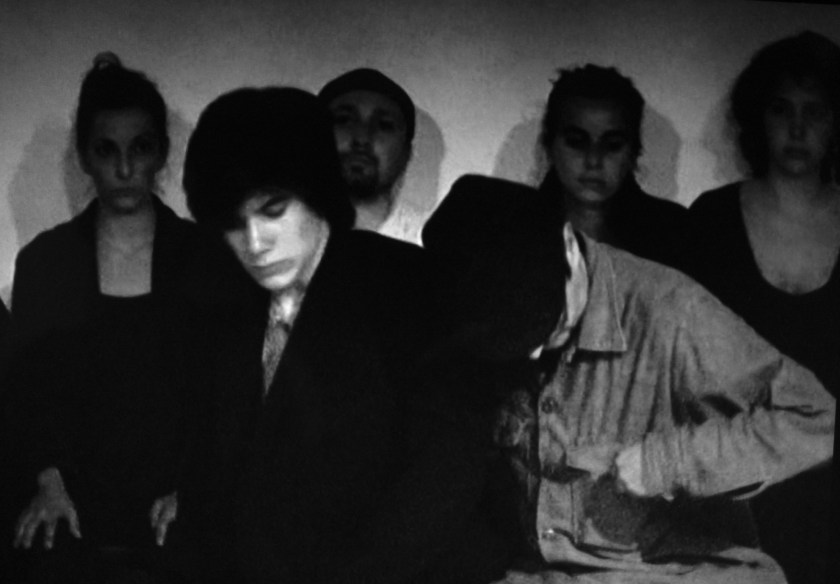
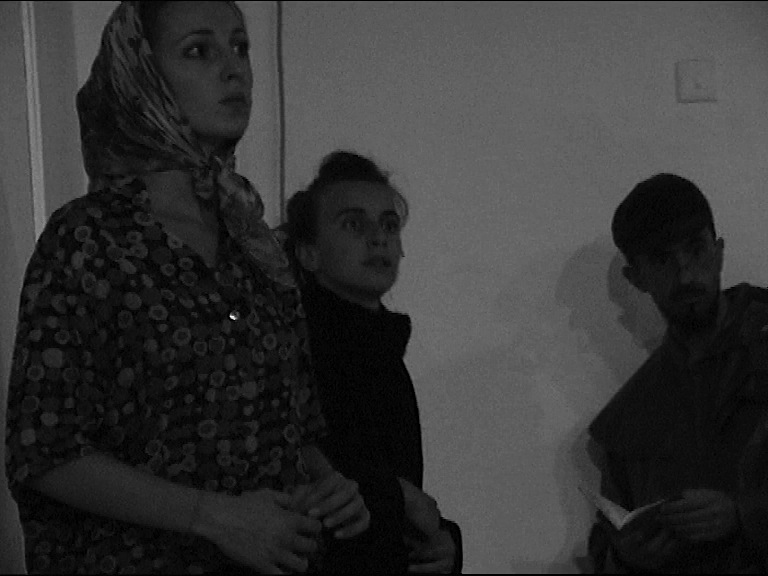
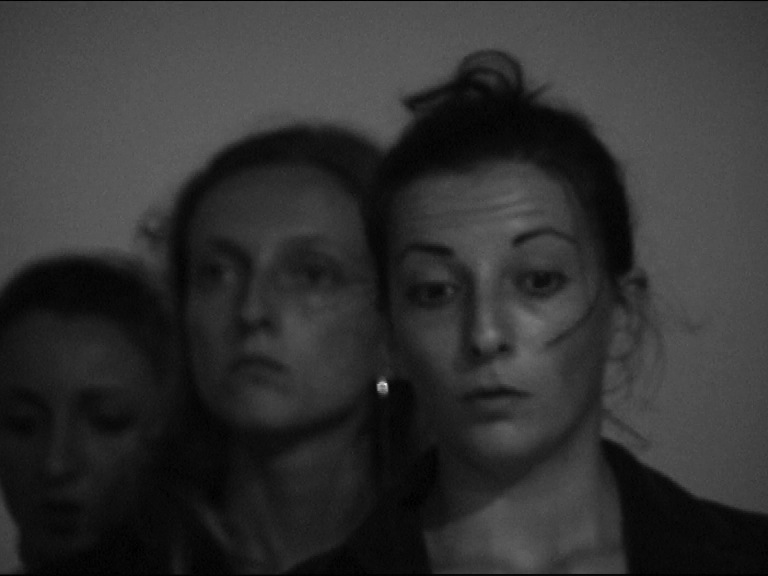
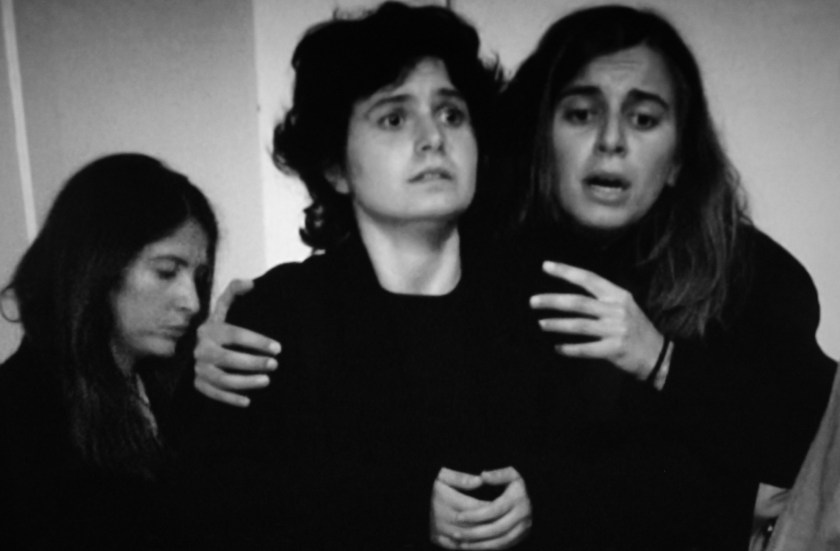
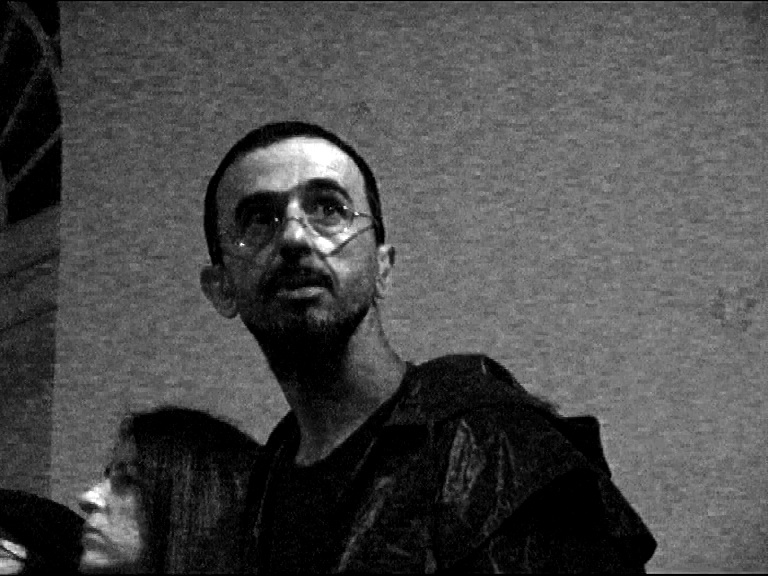
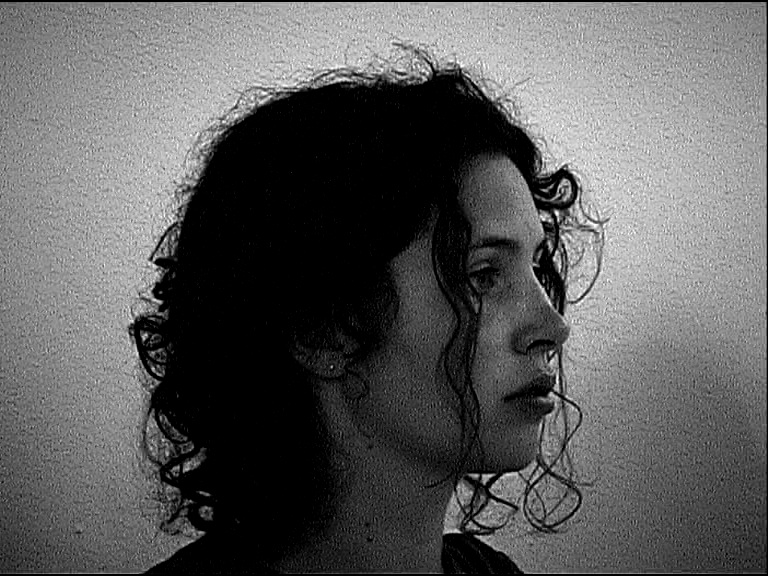
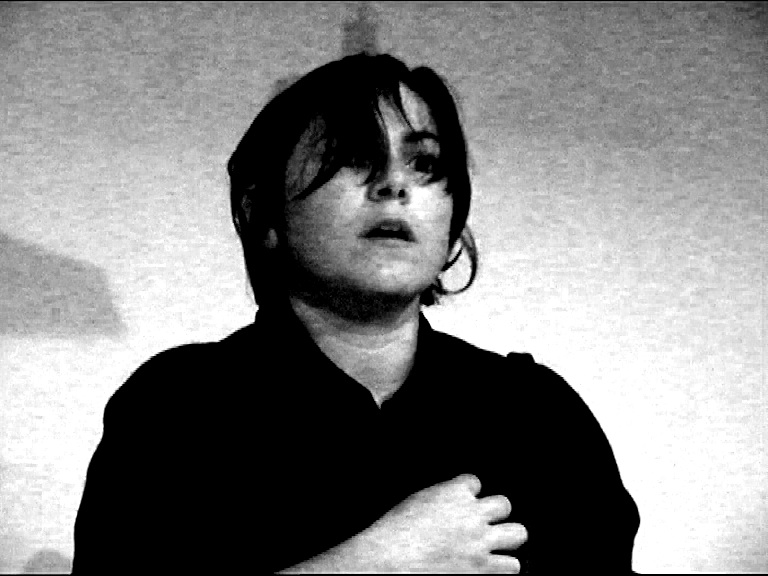
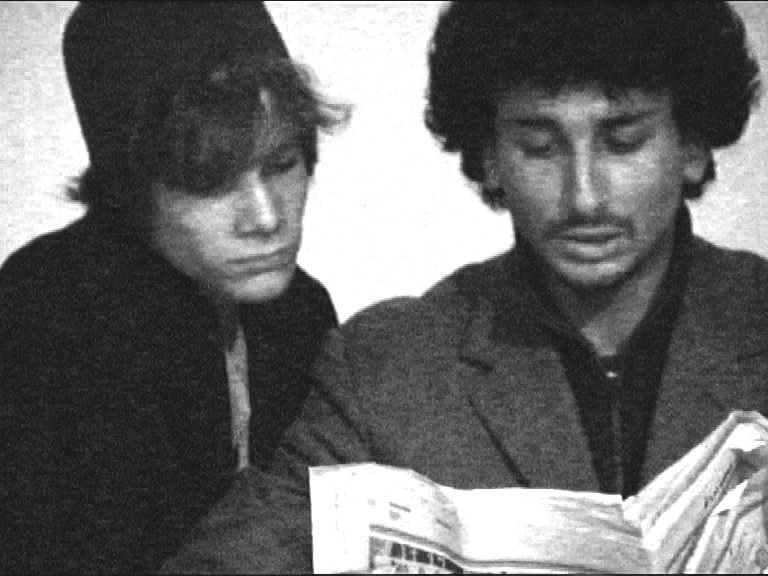
PERCHÉ RICORDARE ANCORA LE TRE SORELLE DI ANTON CECHOV
[WHY STILL REMEMBER THE THREE SISTERS OF ANTON CHECKOV]
2008/09
testo / text Tre Sorelle di Anton Cechov
laboratorio condotto da / workshop led by Anne Zénour
il lavoro è stato presentato nel giugno 2009 alla Corte dei Miracoli (Siena)
con / with Elena Ambrosi, Maurizio Campani, Serena Carmignani, Roberta Ciccarelli, Giuseppe D’Antino, Giulia Fanfani, Carola Haupt, Giulia Ivaldi, Eugenio Moltisanti, Federica Testa, Andrea Traversi, Piero Usberti, Chiara Vesce
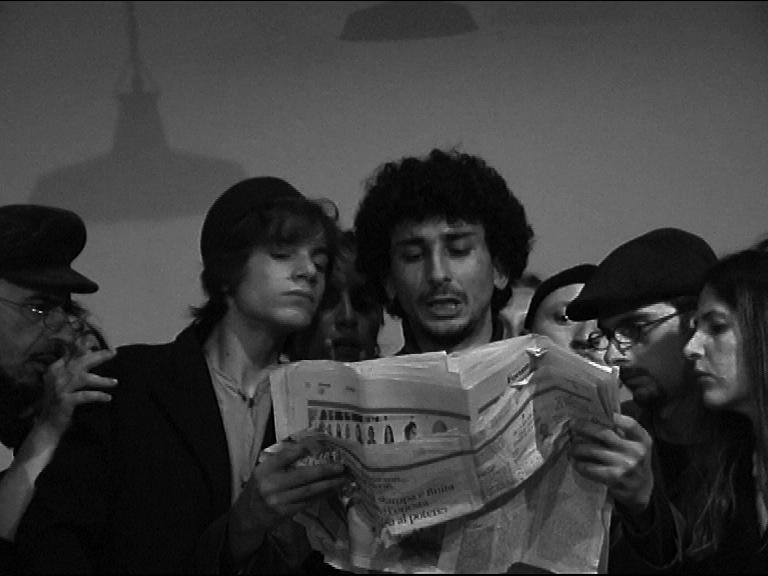
Lavorare lavorare lavorare
Fra due o tre cent’anni la vita sulla terra sarà meravigliosa
Chi l’a detto?
Cechov!
Anton Cechov
Chi è questo Cechov?
Un medico
Uno scrittore
É un veggente questo Cechov?
É morto cent’anni fa
Work work work
In two or three hundred years life on earth will be wonderful
Who said that?
Chekhov!
Anton Chekhov.
Who is this Chekhov?
A doctor.
A writer.
Is this Chekhov a prophet?
He died a hundred years ago




TRISTI FUMMO NELL’AERE DOLCE
[SAD WE WERE IN THE SWEET AIR]
2009/10
testi / texts L’innominabile, Giorni felici, Molloy, Non io, Da un’opera abbandonata, Fallimento 1, L’ultimo nastro di Krapp, Finale di partita, Aspettando Godot di / by Samuel Beckett
laboratorio condotto da / workshop led by Anne Zénour
il lavoro è stato presentato nel giugno 2010 alla Corte dei Miracoli (Siena)
con / with Maurizio Campani, Alberto Cannone, Roberta Ciccarelli, Giuseppe D’Antino, Eugenio Moltisanti, Stefania Placenti, Andrea Traversi, Piero Usberti, Chiara Vesce
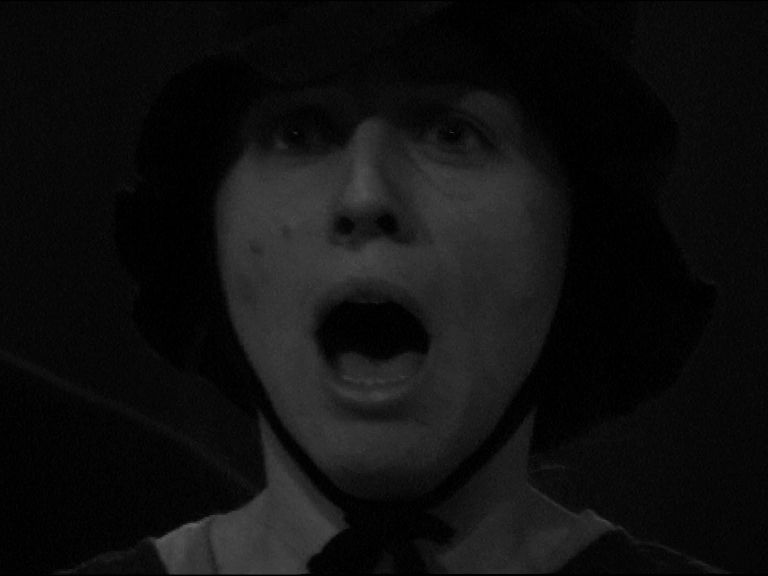
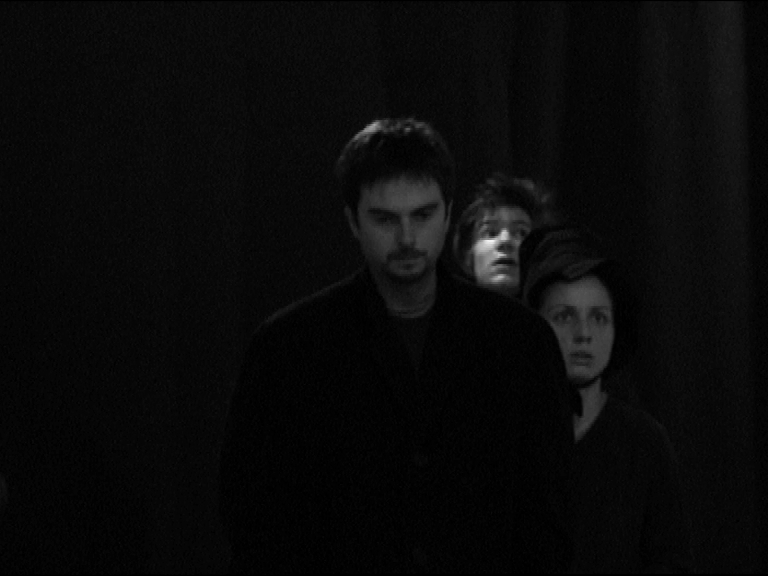
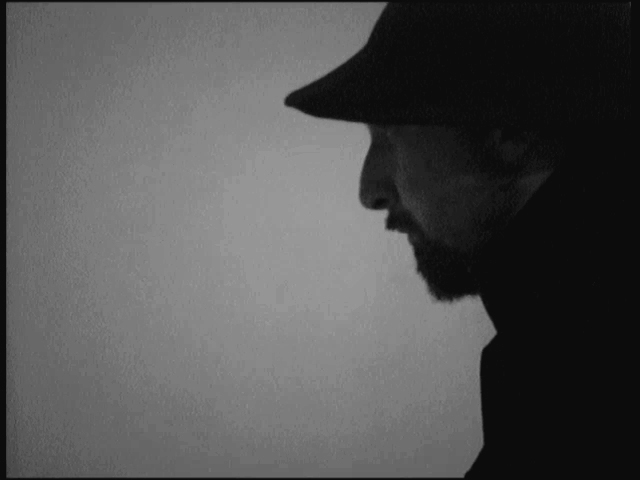
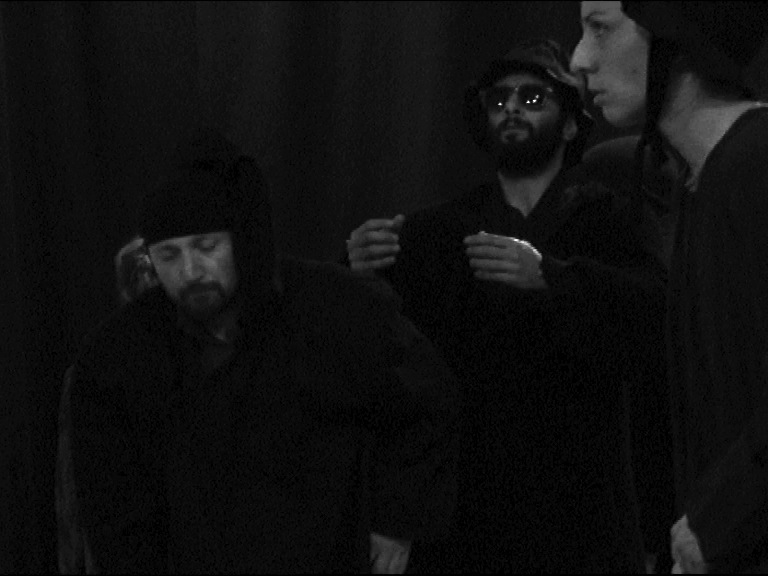
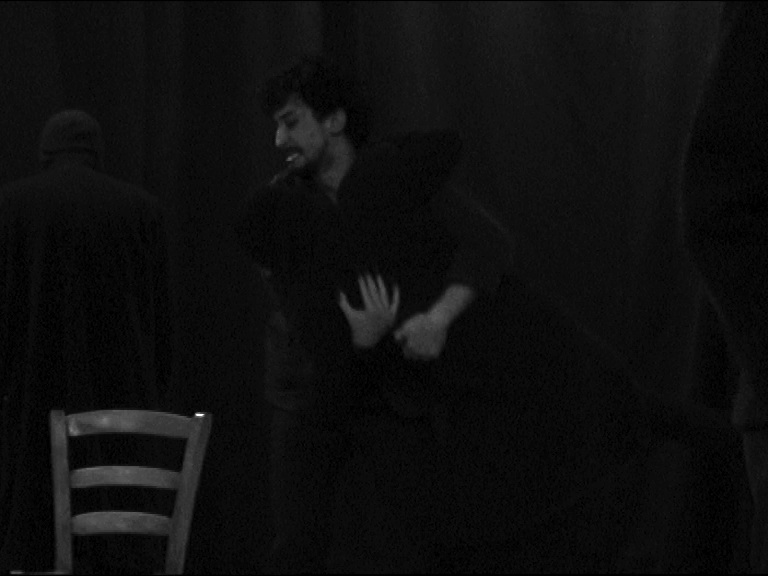
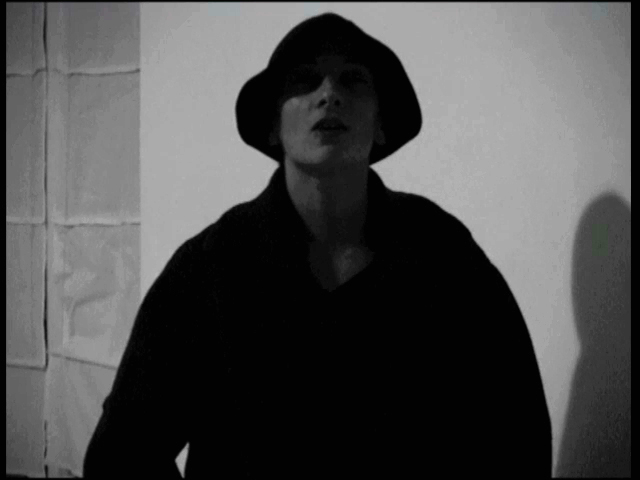
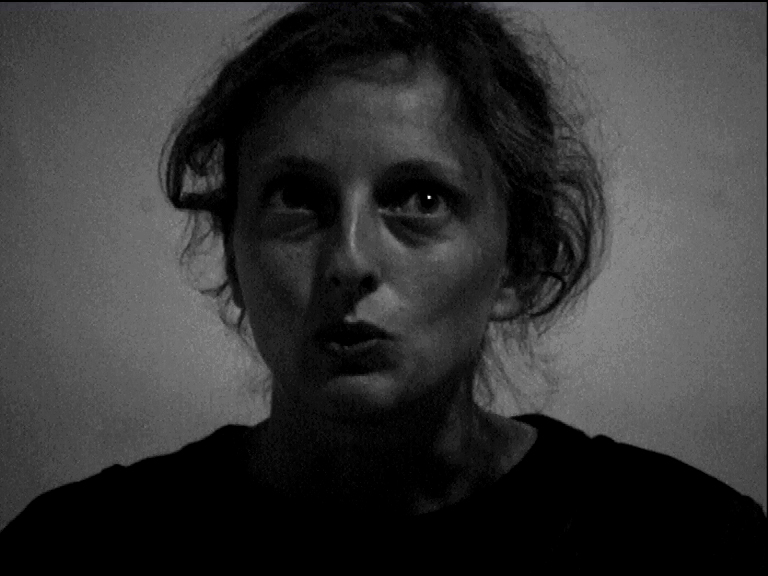
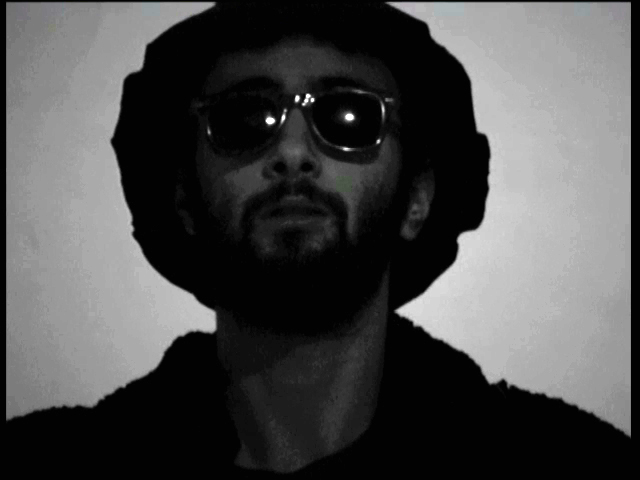
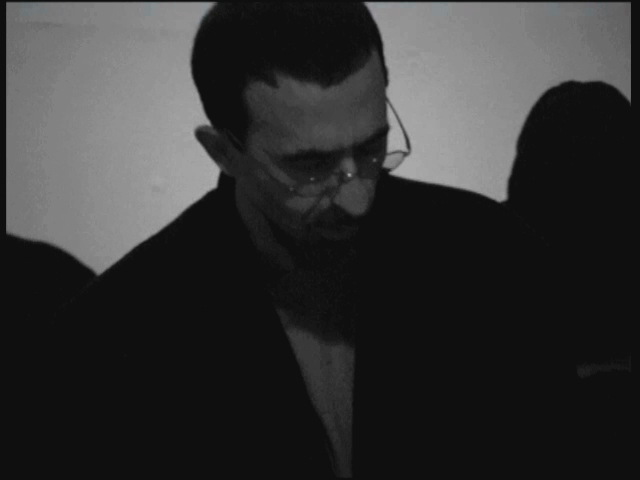
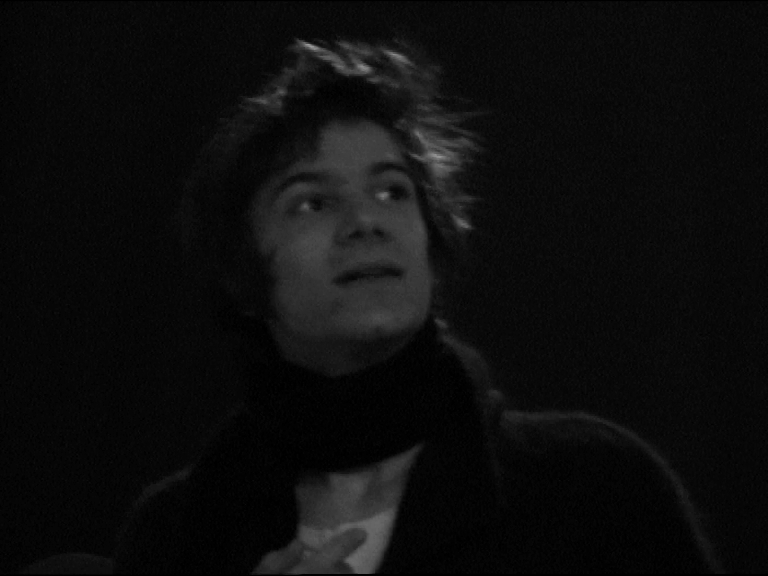
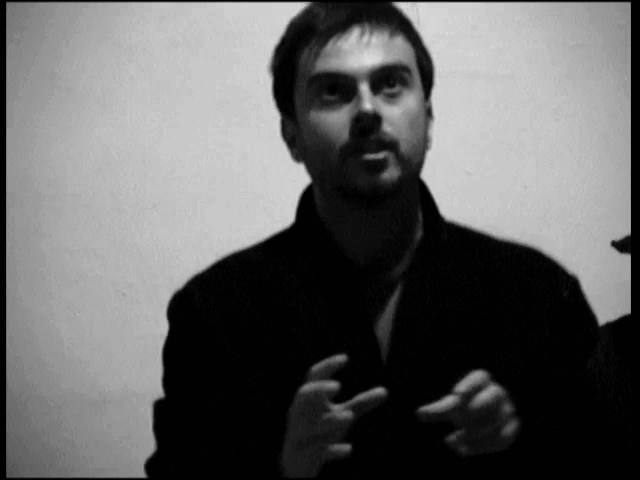
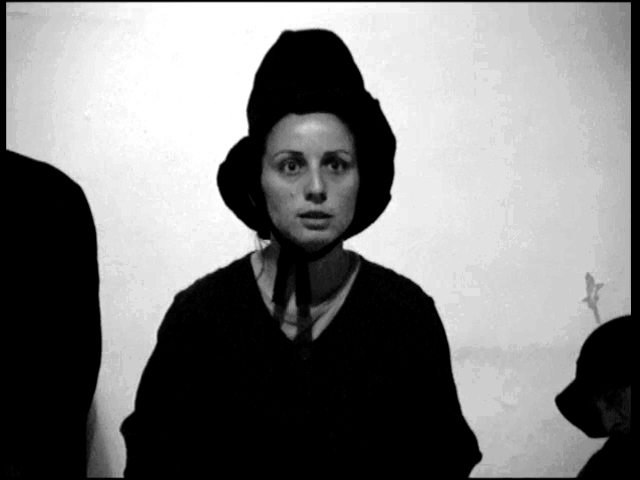
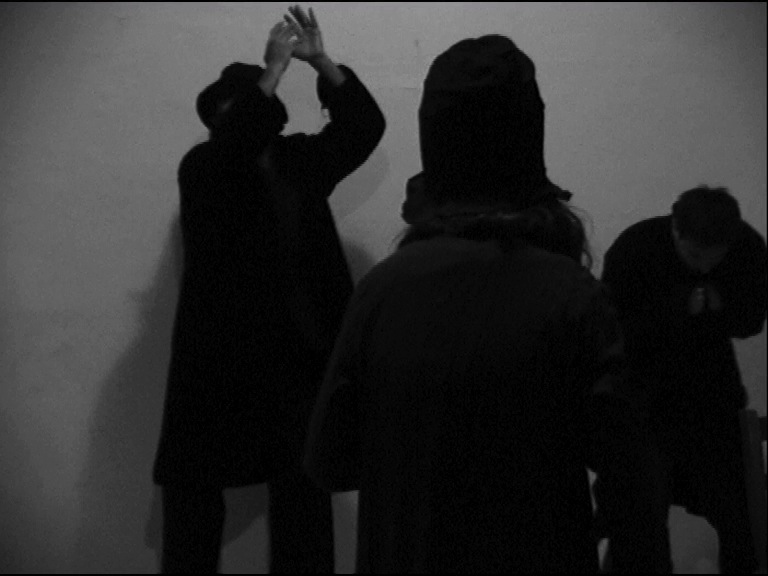
Essere di nuovo quell’ombra, quell’ombra. In quell’ombra di nuovo.
Tutti i personaggi hanno tutto il tempo, un tempo eterno, come i dannati dell’Inferno di Dante. Non c’è fretta per nessuno, né nel parlare, né nel muovere, perché non vanno da nessuna parte, non andranno mai più da nessuna parte.
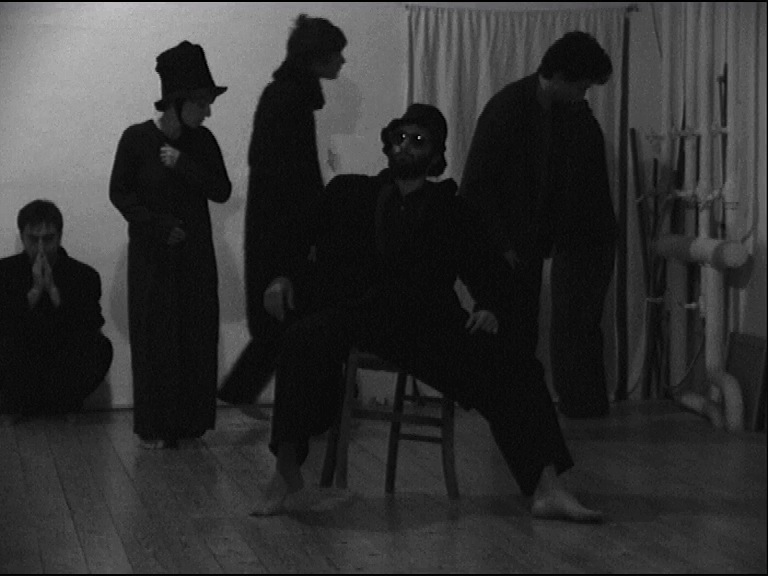
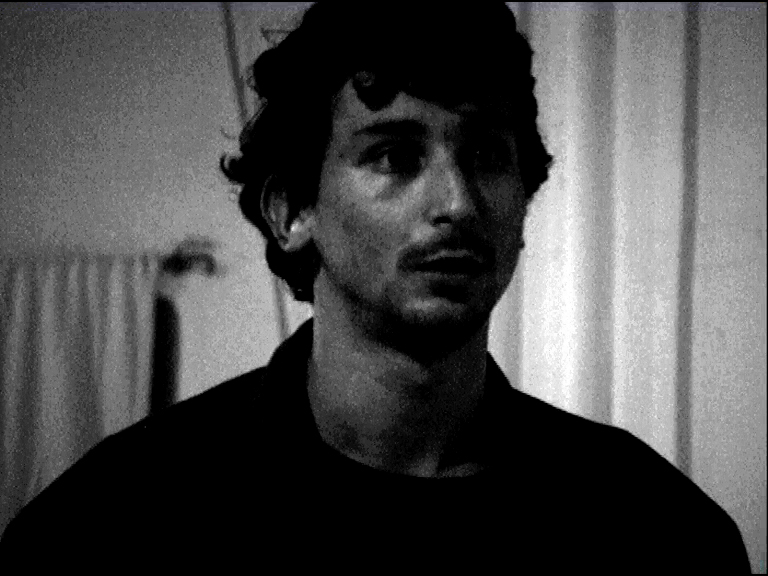
Ciascuno assume singolarmente un testo diverso. Tutti sono immersi nello stesso spazio poco illuminato e vanno e vengono ciascuno per sé.
To be that shadow again, that shadow. In that shadow again.
All the characters have all the time, an eternal time, like the damned in Dante’s Inferno. There is no hurry for anyone, neither in speaking, nor in moving, because they go nowhere, they will never go anywhere again.
Each takes on a different text individually. They are all immersed in the same dimly lit space and come and go each for himself.


ATTRAVERSO I VILLAGGI
[WALK ABOUT THE VILLAGES]
2010/11
testo / text Attraverso i villaggi di / by Peter Handke
laboratorio condotto da / workshop led by Anne Zénour
il lavoro è stato presentato nel giugno 2011 alla Corte dei Miracoli (Siena)
con / with Carlo Brunelli, Maurizio Campani, Serena Carmignani, Roberta Ciccarelli, Giuseppe D’Antino, Eugenio Moltisanti, Maria Novella Tirrito, Lorella Russo, Piero Usberti, Tommaso Usberti
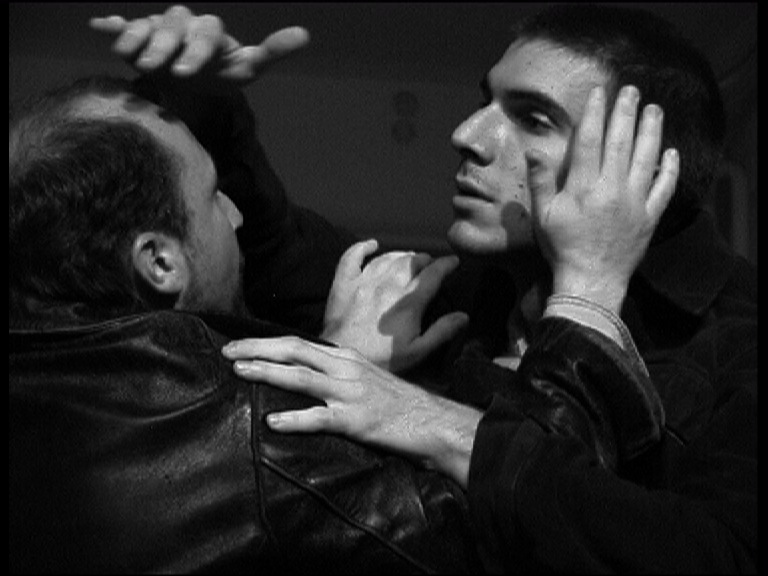
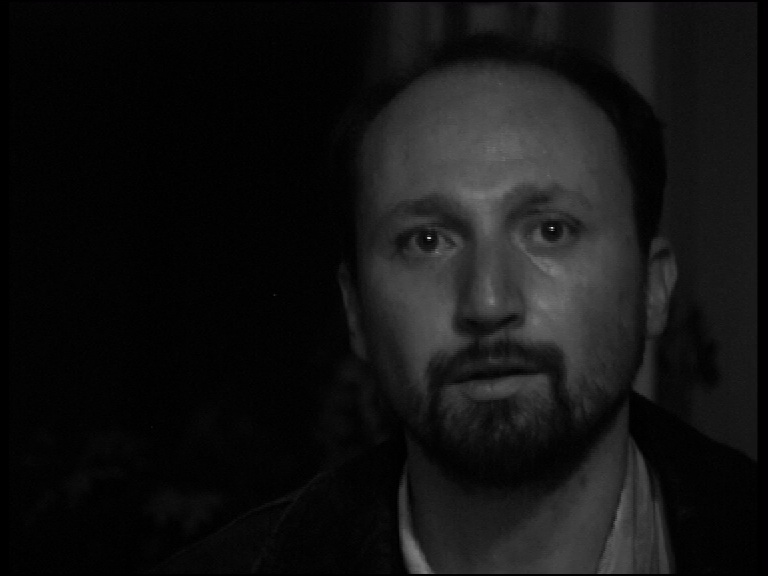
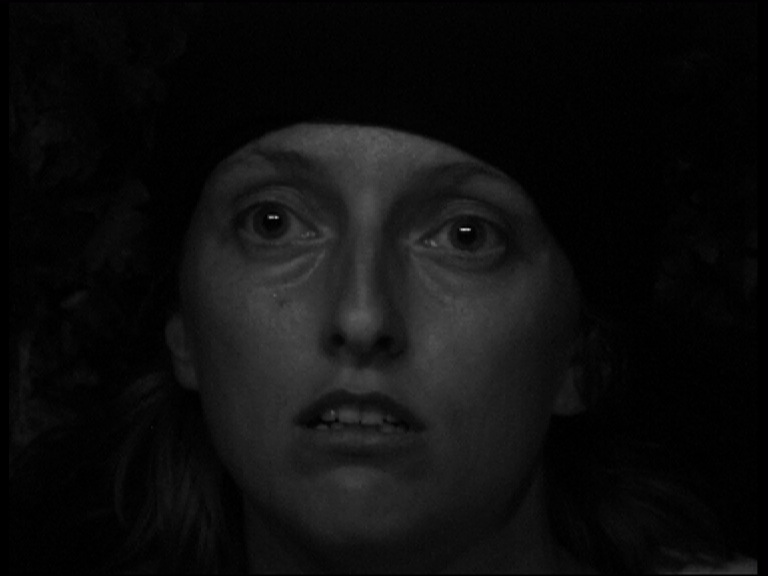
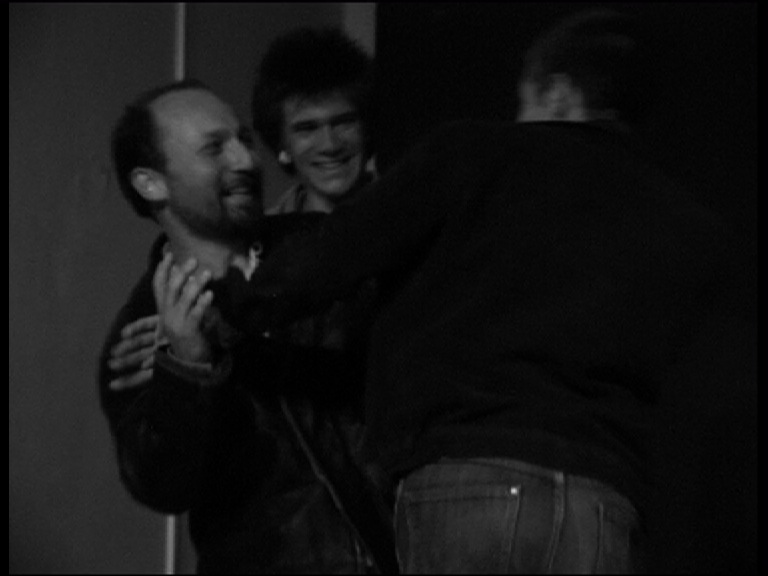
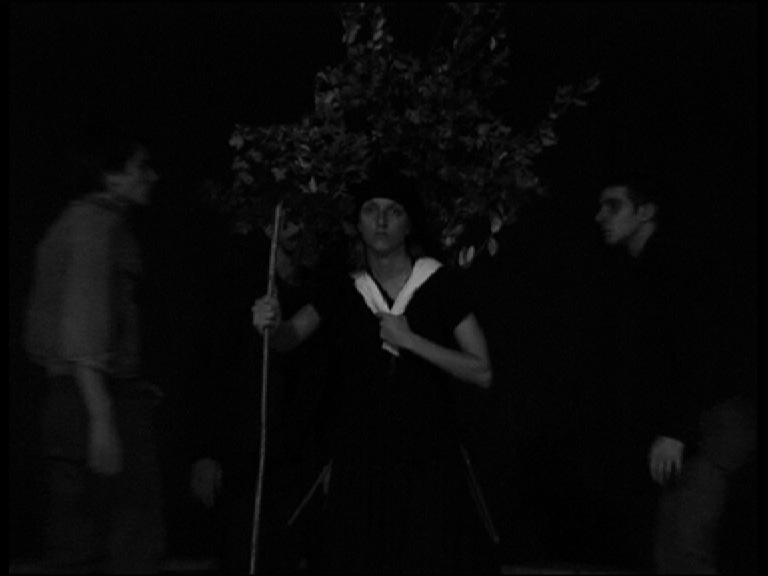
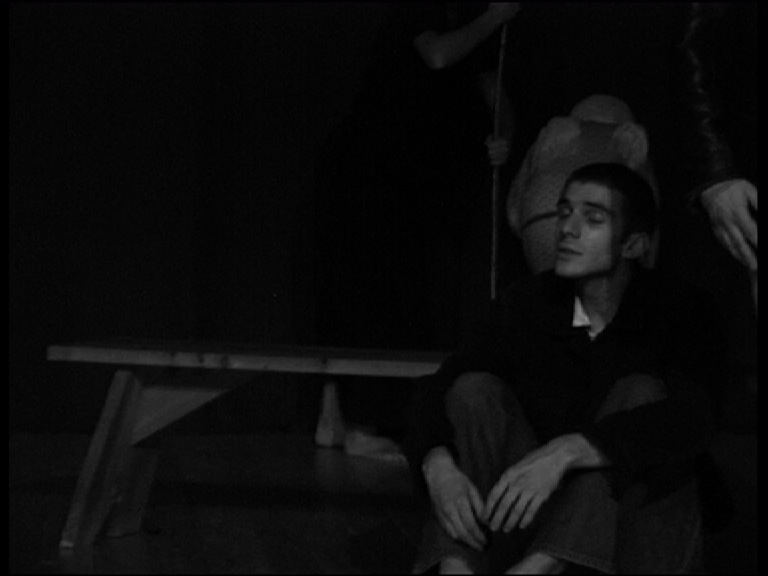
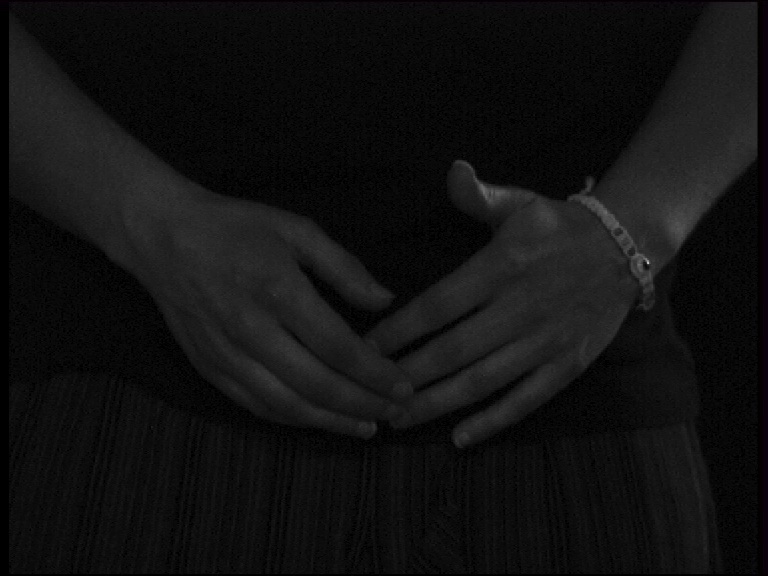
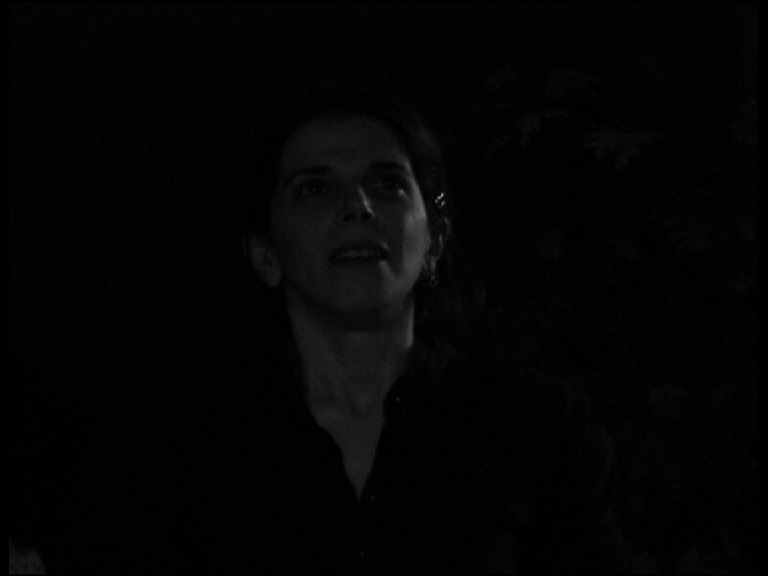
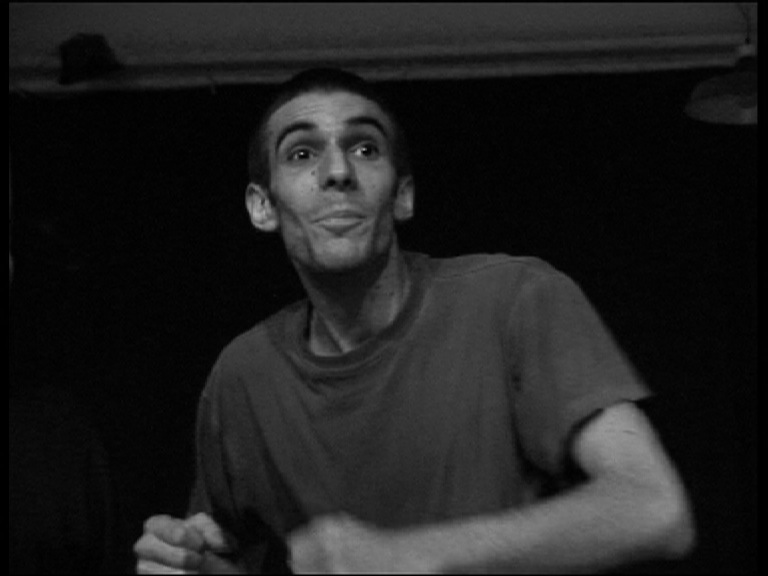
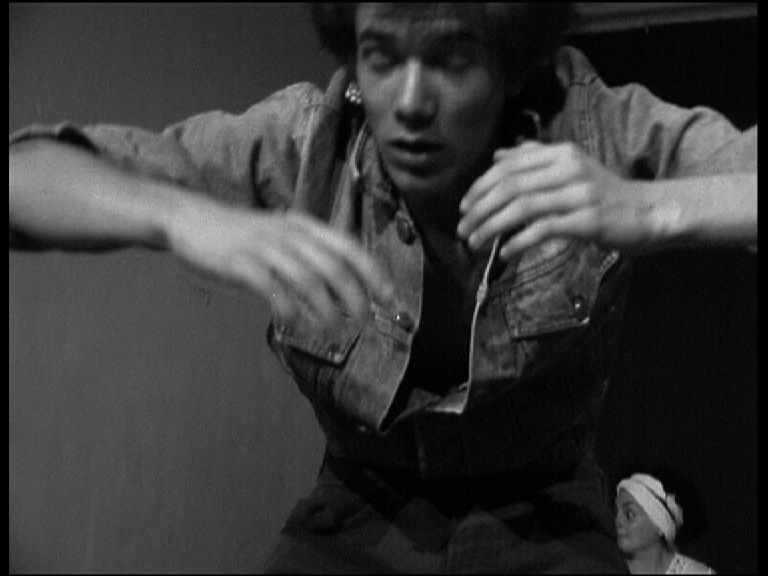
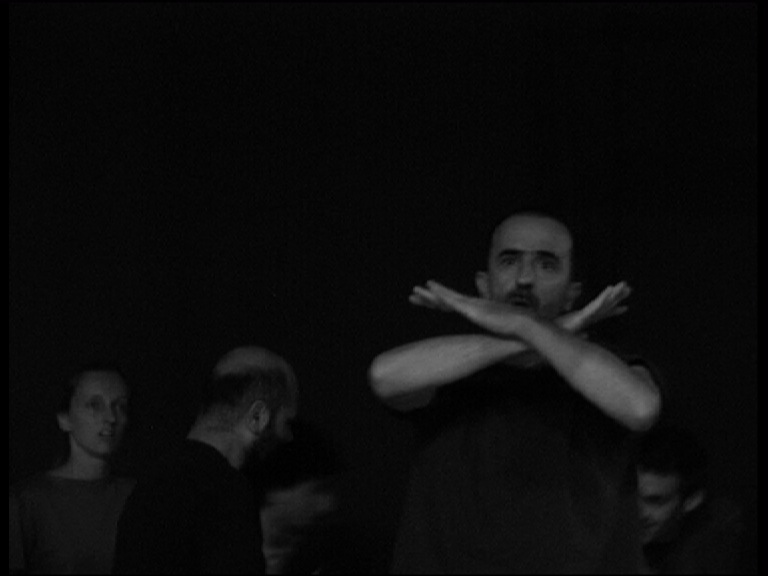
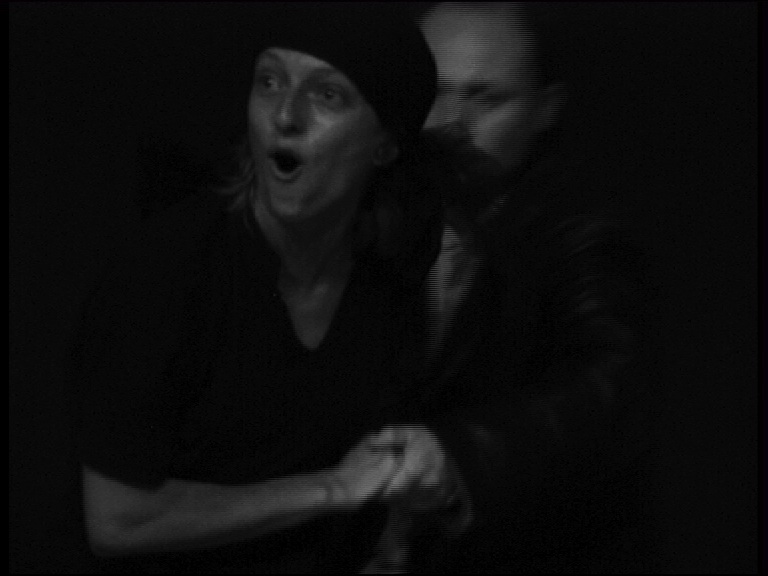
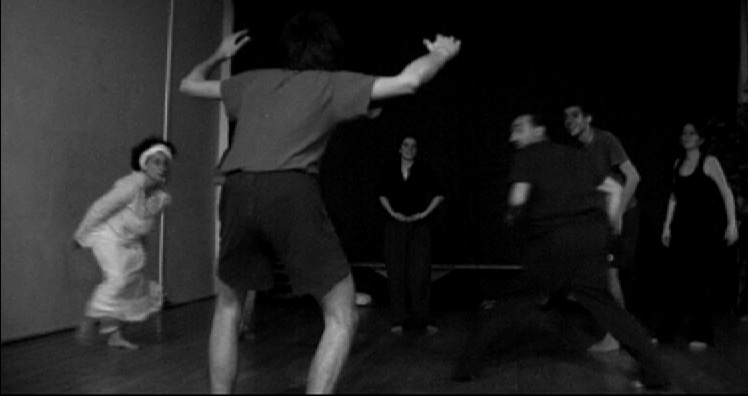
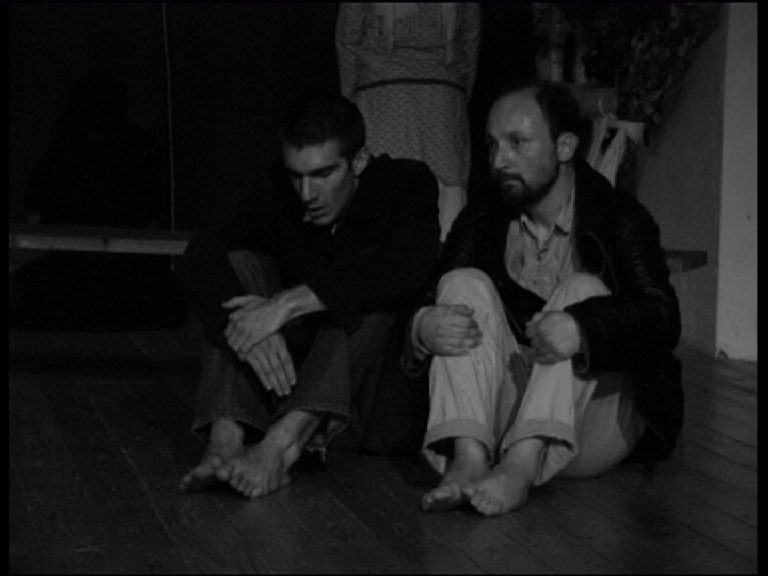
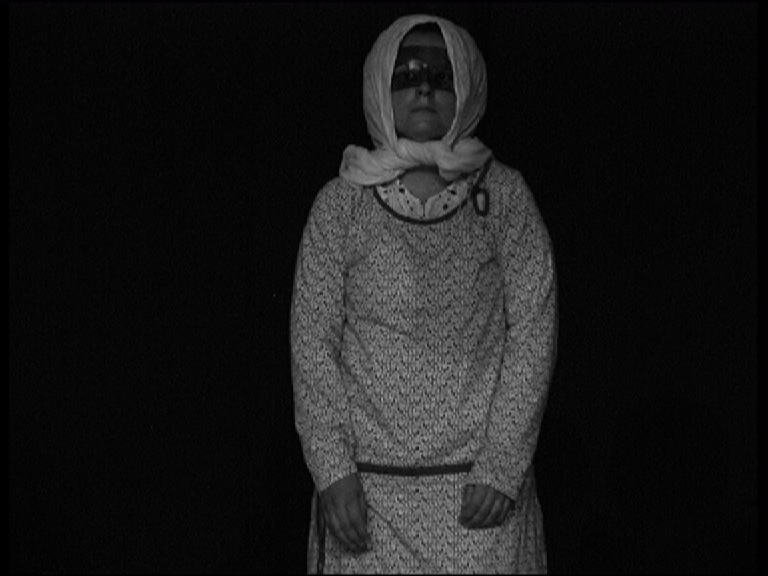
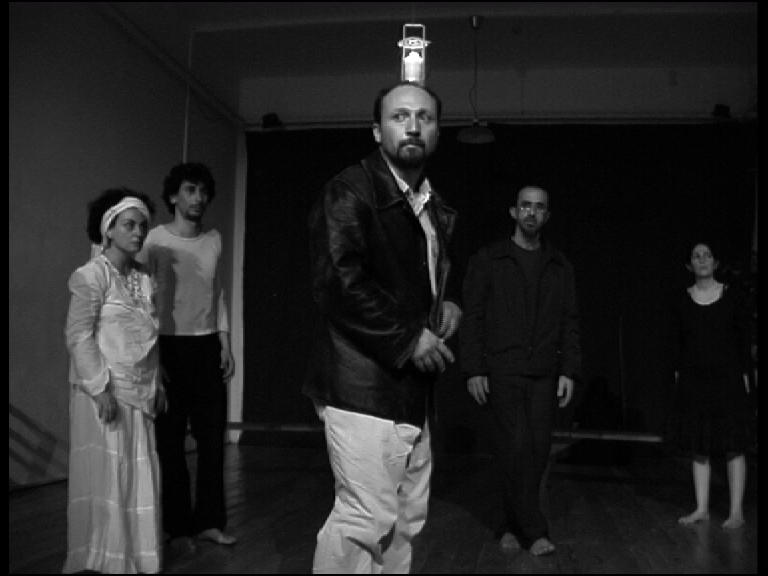
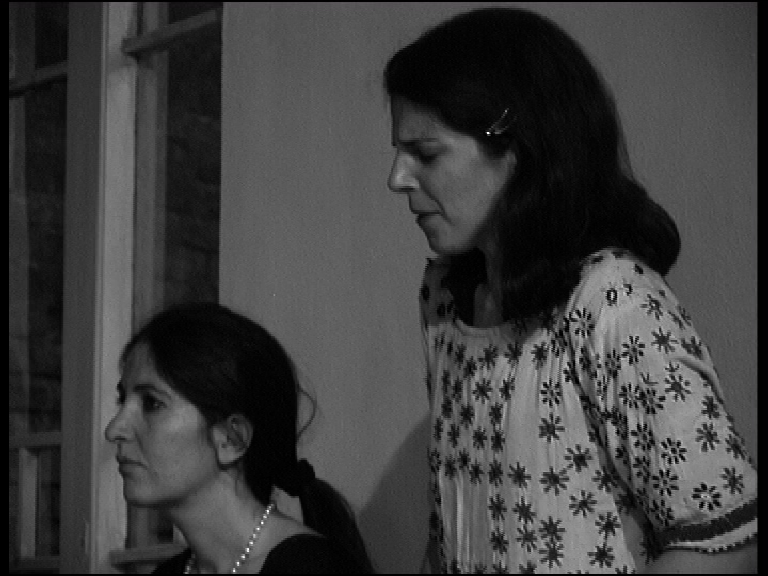
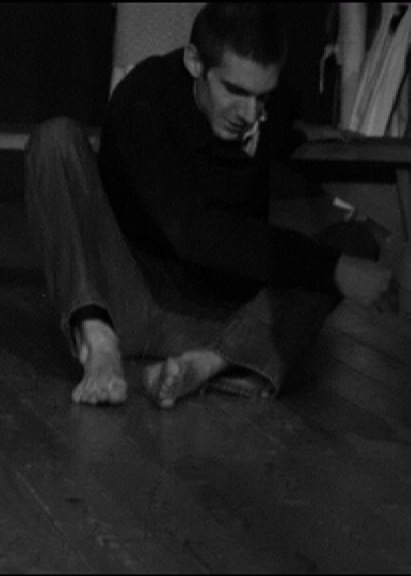
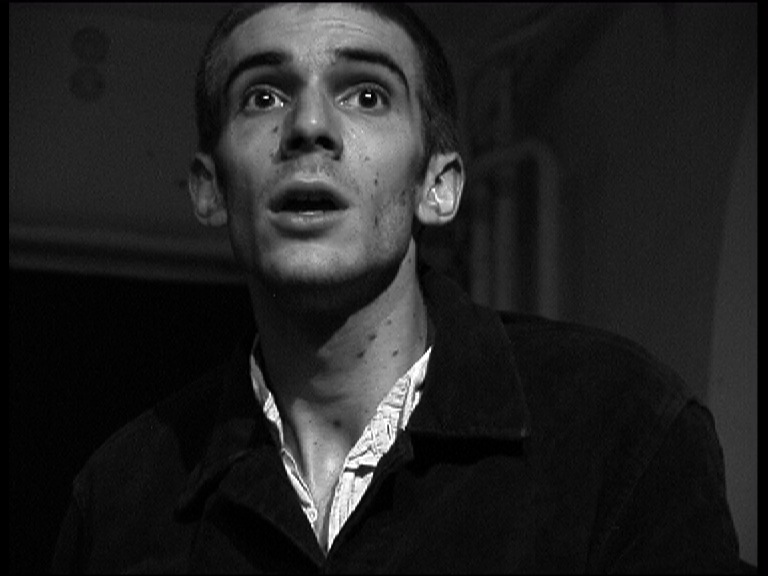
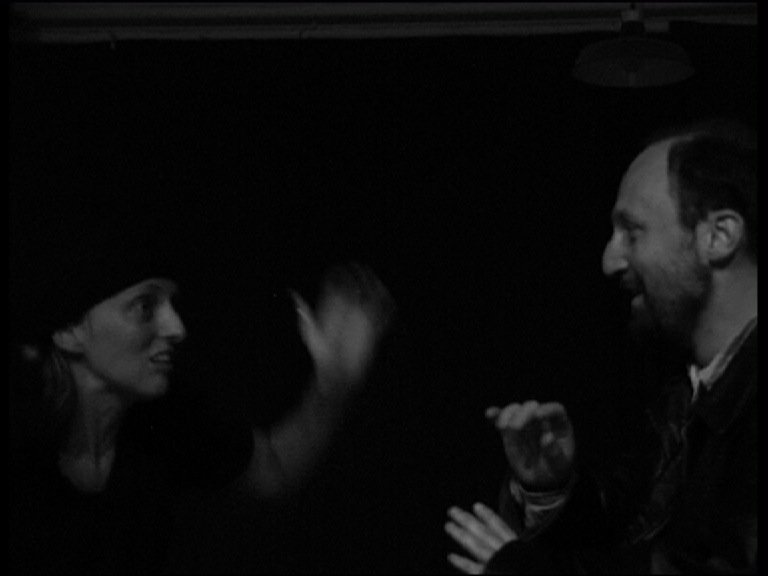
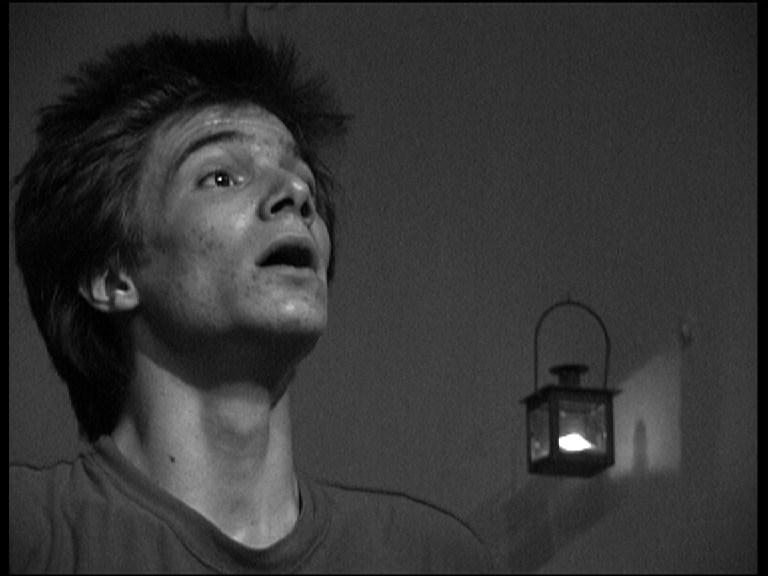
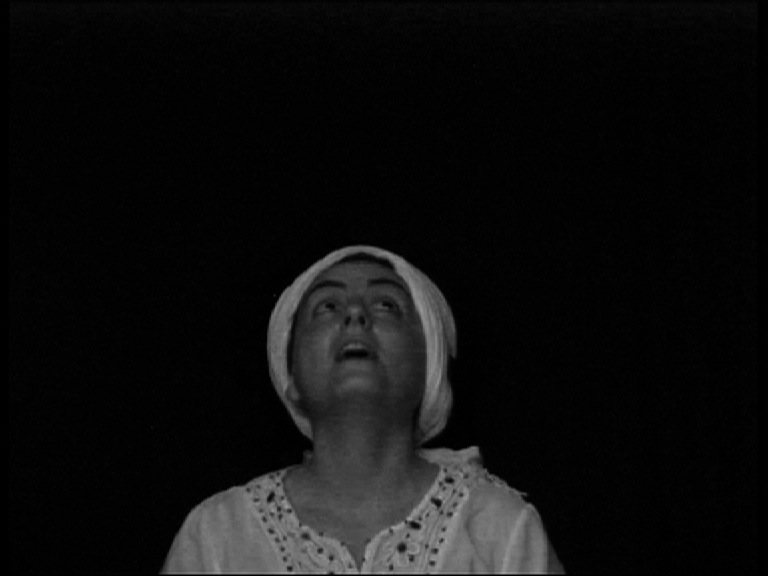
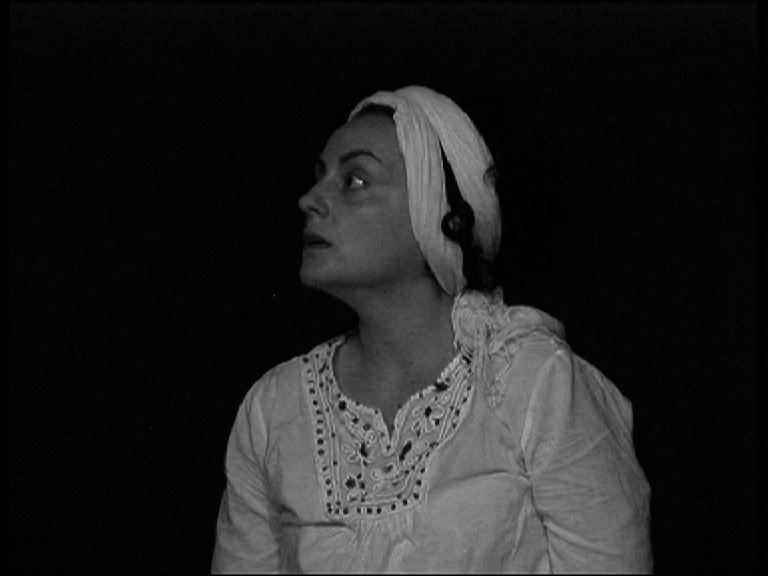
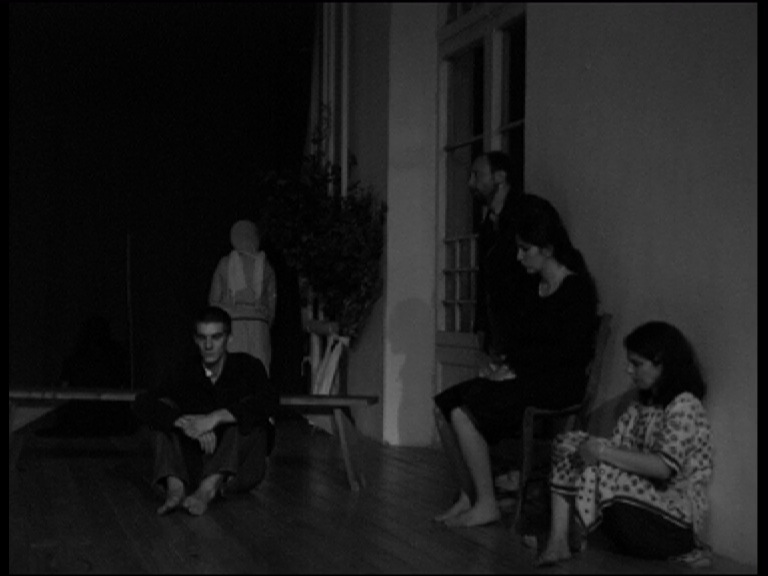
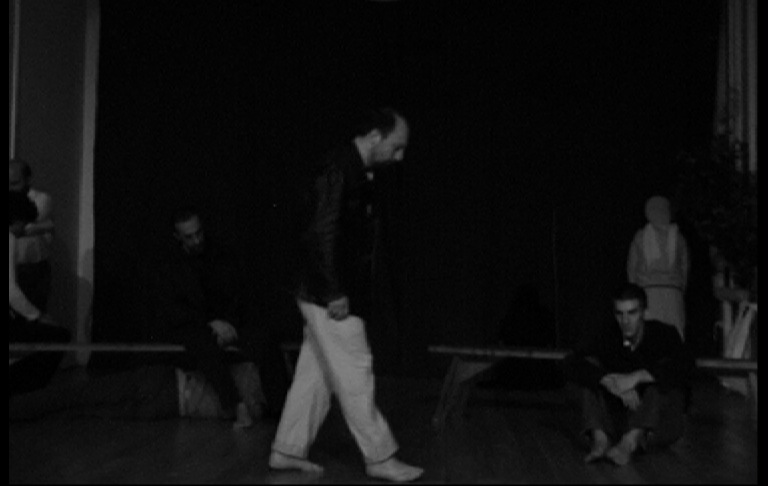
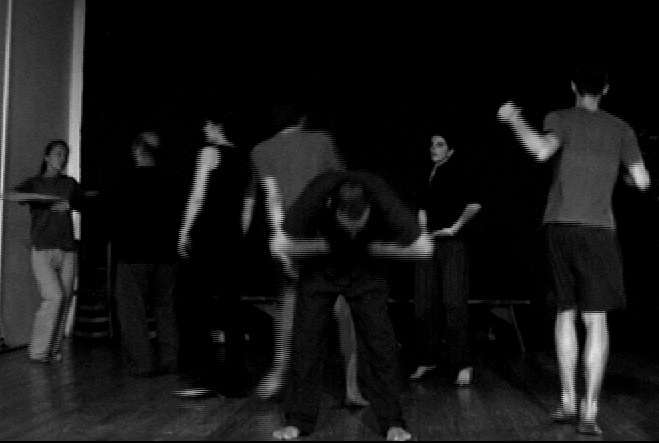
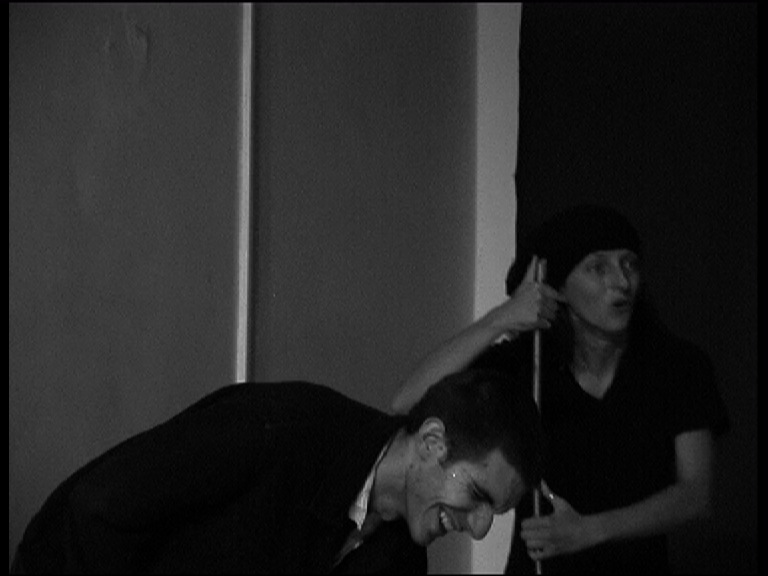
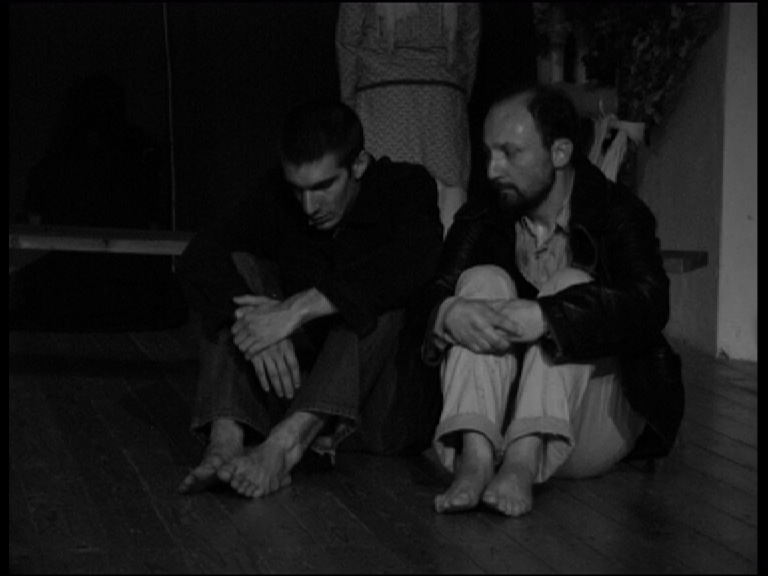
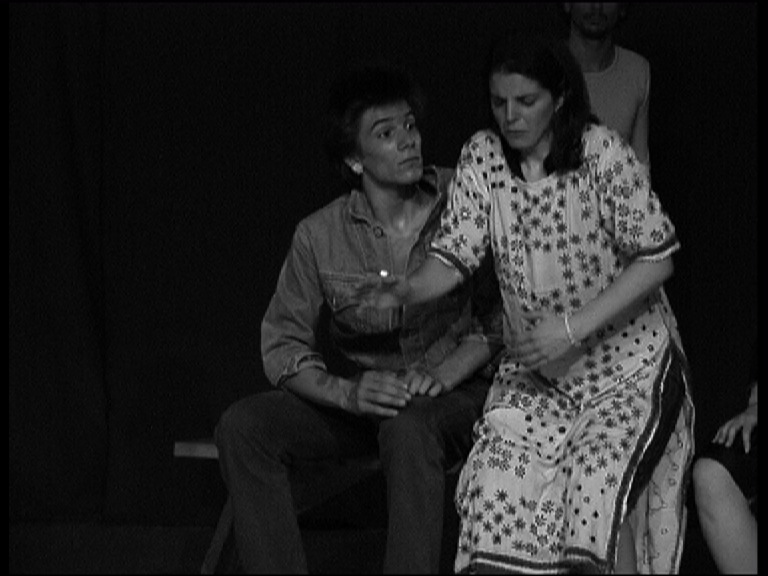
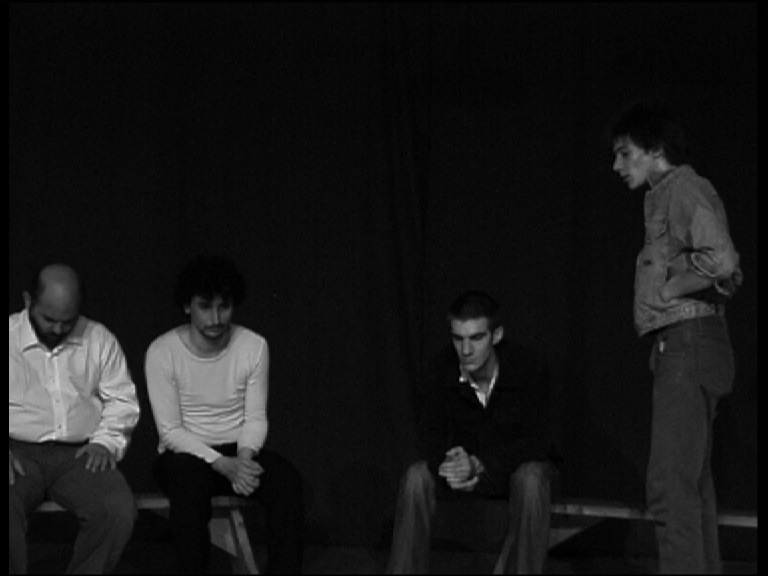
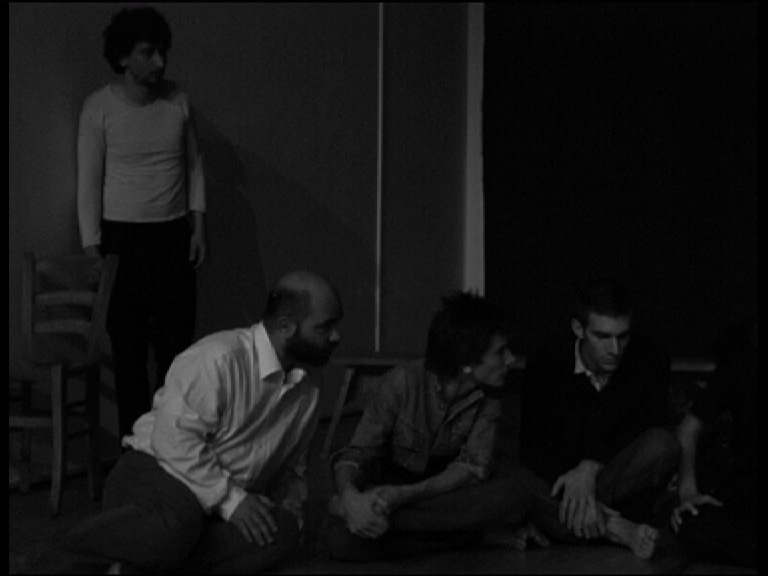
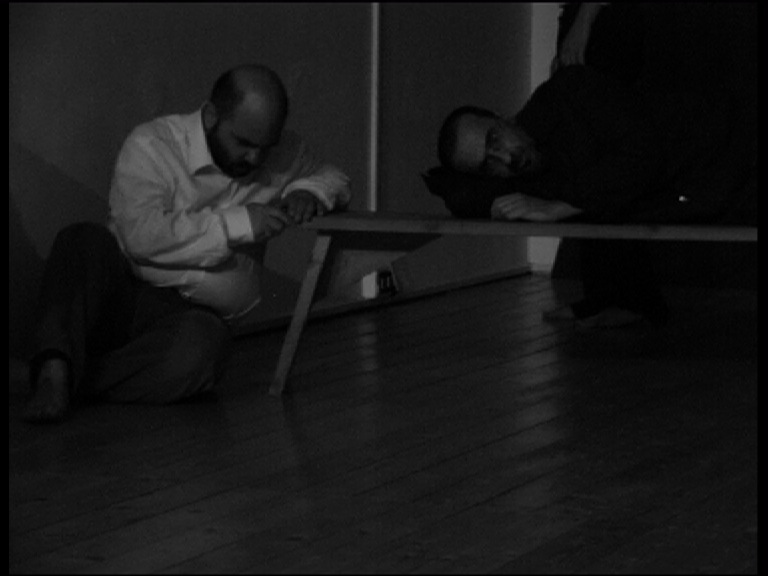
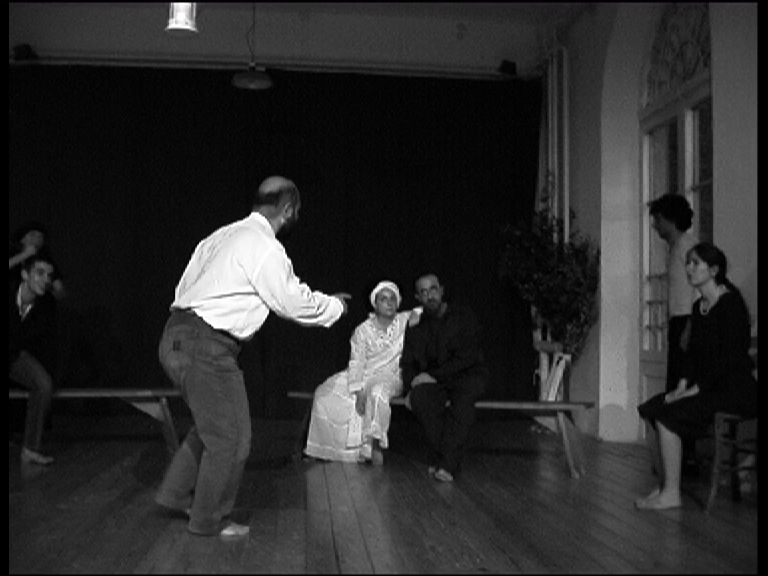
Un paese di montagna, un gruppo di operai edili venuti a lavorare temporaneamente su un cantiere, due fratelli e una sorella dalle relazioni difficili, originari del paese, e tre donne solitarie. Un testo dove ciascuno si espone davanti agli altri rivelando le sue sofferenze, le sue ribellioni o i suoi sogni attraverso dei monologhi e dei dialoghi .
Tutto si svolge all’aperto, tutto è, in qualche modo, pubblico.
Anche se sono in due a parlare e apparentemente a rispondersi l’un l’altro, lo stile lirico di Handke porta i dialoghi fuori dal psichologico, diventano dei canti, o dei manifesti o protesta- zioni gridati a voce alta per la strada, o dei frammenti di racconti ispirati a quelli del romanticesimo tedesco.
La presenza così forte del fuori, del paesaggio (anche del paesaggio distrutto ), del corpo offeso (per usare una parola di Vittorini)dei personaggi, la loro lucidità e disperazione e rivolta, tutto, in questo testo scritto più di 30 anni fa, è il nostro mondo attuale: in pezzi, ma è anche, malgrado la disperazione, una celebrazione della vita, e una celebrazione della parola.
A mountain village, a group of construction workers who have come to work temporarily on a building site, two brothers and a sister with difficult relationships, originally from the village, and three lonely women. A text where each one exposes himself before the others, revealing his sufferings, his rebellions or his dreams through monologues and dialogues.
Everything takes place out in the open, everything is, in some way, public. Even though it is two people talking and seemingly answering each other, Handke’s lyrical style takes the dialogues out of the psychological, they become songs, or manifestos or protests shouted out loud in the street, or fragments of stories inspired by those of German Romanticism.
Such a strong presence of the outside, of the landscape (even the destroyed landscape), of the offended body (to use a word of Vittorini’s) of the characters, their lucidity and desperation and revolt, everything in this text written more than 30 years ago, is our current world: in pieces, but it is also, despite the desperation, a celebration of life, and a celebration of the word.










LÀ DOVE CI INCONTRIAMO
[THERE WHERE WE JOIN TOGETHER]
2011/12
testi / texts I ciechi di / by Maurice Maeterlinck, Inverno di / by Jon Fosse
laboratorio condotto da / workshop led by Anne Zénour
il lavoro è stato presentato nel giugno 2012 alla Corte dei Miracoli (Siena)
con / with Maurizio Campani, Serena Carmignani, Nauel Contarino, Giuseppe D’Antino, Marilisa Meccariello, Eugenio Moltisanti, Eugenia Nicolaci, Maddalena Sinatti, Andrea Traversi
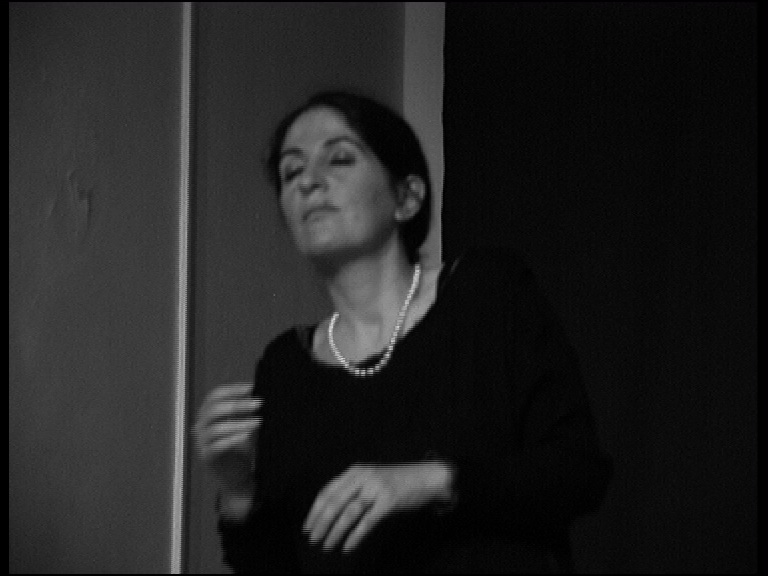
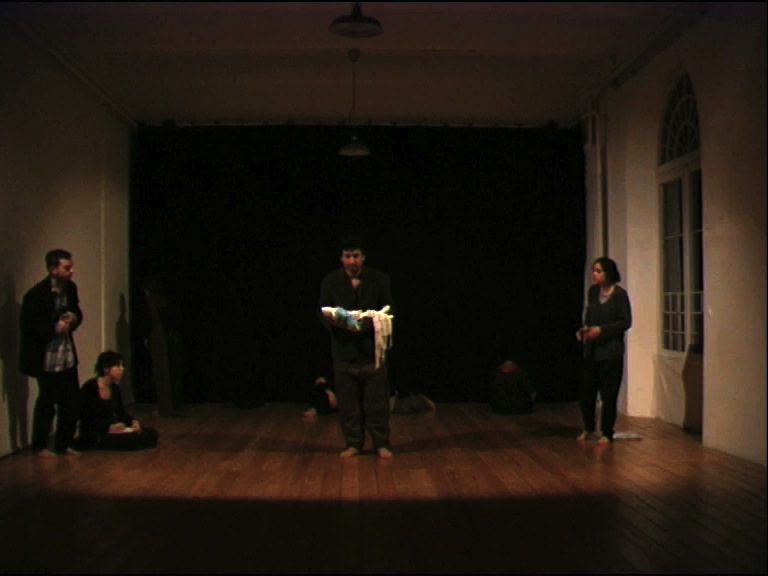
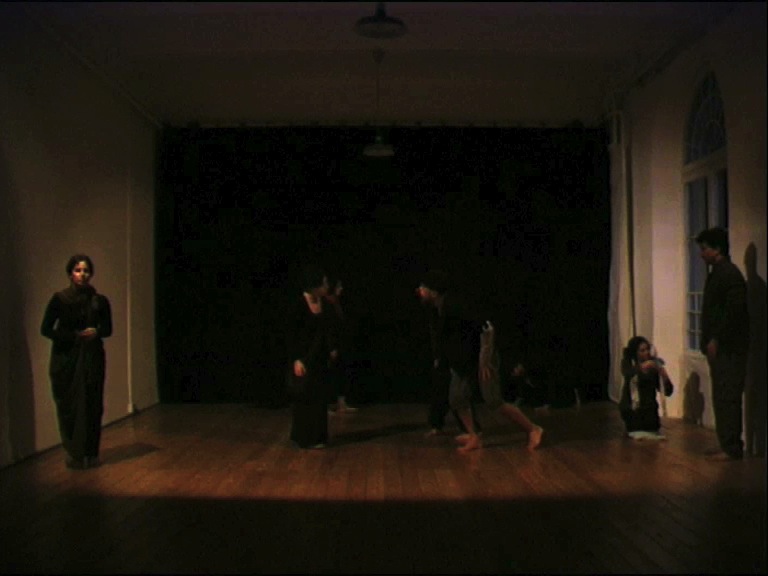
Un gruppo di persone che si sono perse, scappate, spostate non si sa da dove, da cosa. Non si sa da quanto tempo si trovano lì.
Il luogo dove si trovano non ha nessuna caratteristica, è un non-luogo, un nulla parte.
Due dialoghi a più voci aprono e chiudono la loro apparizione: una frammento del testo di Maeterlinck “I ciechi”e un frammento del testo di Jon Fosse”Dormi, bambino mio”.
Nei due testi, una domanda ricorrente:”Dove siamo?”, ripetuta tante volte, senza trovare risposta. Ma alla fine non cercano più di sapere. Sono lì. Nei due testi l’apparizione della neve. La recitazione chorale del testo di Walser “Nevicata” viene fuori come una ballata , che fa bene a sentire, con la neve che comincia a scendere e non si ferma più. Si coricano a terra, delicatamente, la neve di Walser continua a scendere, e viene una sorta di pace, di riconciliazione:
Adesso i pensieri è finito
Adesso le parole è finito
A group of people who got lost, escaped, moved from no one knows where, from what. It is not known how long they have been there.
The place where they find themselves has no characteristics, it is a non-place, a nowhere. Two dialogues in several voices open and close their appearance: a fragment of Maeterlinck’s text “The Blind Men” and a fragment of Jon Fosse’s text “Sleep, my child”.
In the two texts, a recurring question: “Where are we?”, repeated many times, without finding an answer. But in the end they no longer seek to know. They are there. In the two texts, the apparition of snow. The choral recitation of Walser’s text ‘Snowfall’ comes out like a ballad, which is good to hear, with the snow that begins to fall and does not stop. They lie on the ground, gently, Walser’s snow continues to fall, and a kind of peace, of reconciliation, comes:
Now thoughts is over
Now the words is over

AGAMENNONE
[AGAMEMNON]
2012/13
testi / texts Agamennone di / by Eschilo, Oratorio di Natale di / by W.H. Auden
laboratorio condotto da / workshop led by Anne Zénour
il lavoro è stato presentato nel giugno 2013 alla Corte dei Miracoli (Siena)
con / with Maurizio Campani, Nauel Contarino, Giuseppe D’Antino, Monica Dresda, Carolina Germini, Marilisa Meccariello
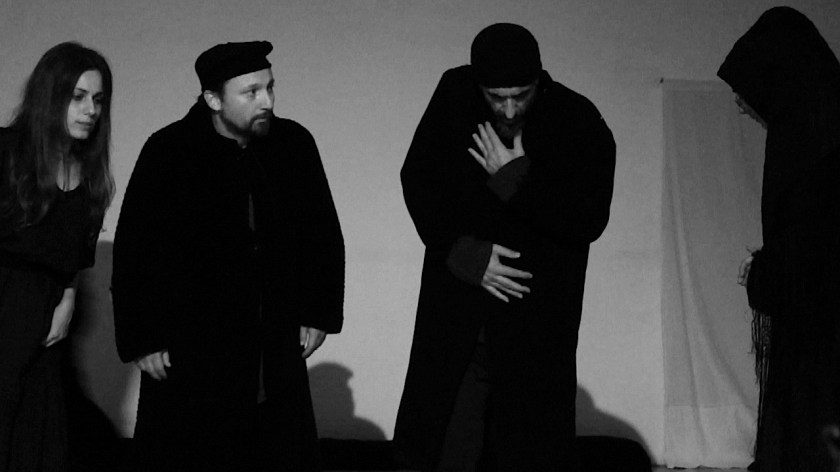
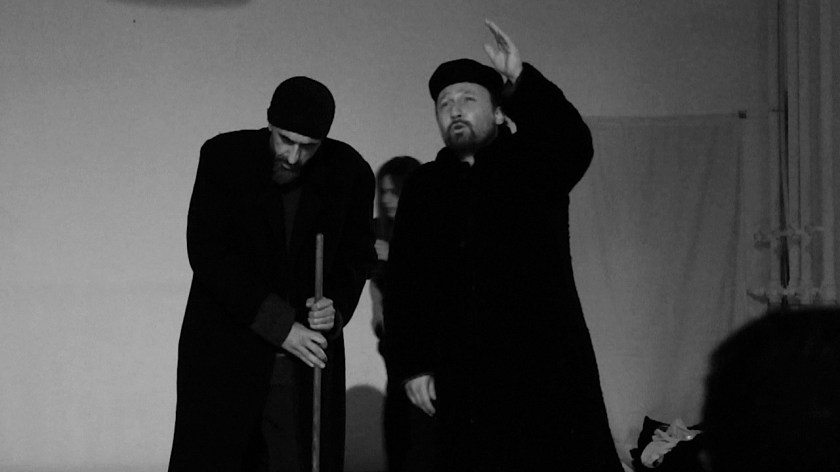
Qualcosa sta per accadere: qualcosa che oltrepassa tutto quello che si è vissuto e saputo fino adesso, una minaccia di annientamento totale.
Something is about to happen: something beyond all that has been lived and known so far, a threat of total annihilation.
… Ma allora eravamo bambini: questo era un momento fa,
prima che una novità offensiva fosse introdotta
nelle nostre vite. Perché non siamo stati messi in guardia?
Forse lo siamo stati.
Forse quel misterioso ronzio dietro il cervello
che sentiamo a volte- sedendo solo
nella sala d’aspetto di una stazione di campagna…………non era indigestione
ma quest’Orrore che cominciava a farsi strada?…
(da W.H. Auden: “Per il tempo presente – Oratorio di Natale”)
... But we were children then: that was a moment ago,
before an offensive novelty was introduced
into our lives. Why were we not warned?
Perhaps we were.
Maybe that mysterious buzzing in the back of the brain
that we sometimes hear – just sitting
in the waiting room of a country station………… was not indigestion
but this Horror that was beginning to set in?
(from W.H. Auden: “For the Present Time – Christmas Oratorio”)
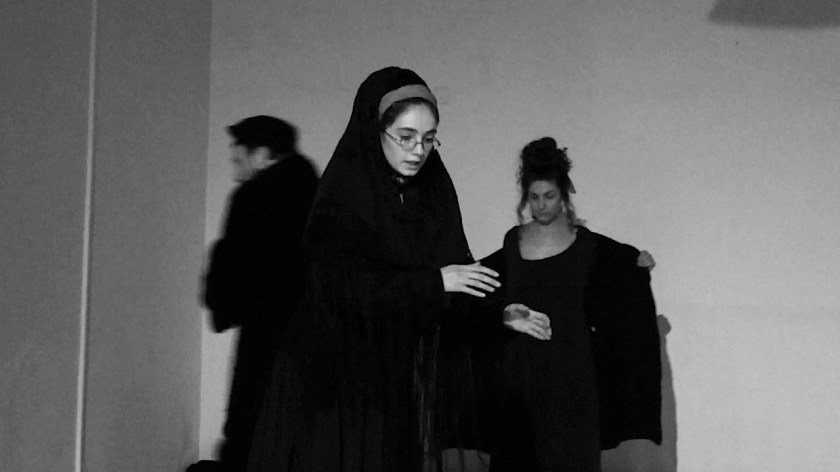
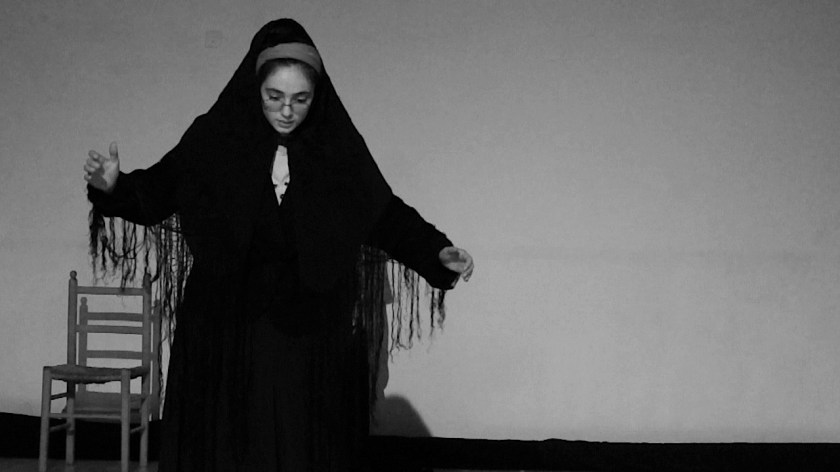
Dei giovani si rifugiano in una cantina, dove qualcuno li ha preceduti: una donna, Celeste, la cui figura è ispirata alla Celeste descritta da Giacomo Debenedetti nel racconto intitolato 16 ottobre 1943: Celeste, quella che sa cosa sta per succedere. E’ lei che li guida, li sostiene, come una levatrice nel tentativo di dare vita a dei frammenti del testo antico.
Some young people take refuge in a cellar, where someone has preceded them: a woman, Celeste, whose figure is inspired by the Celeste described by Giacomo Debenedetti in the short story entitled 16 October 1943: Celeste, the one who knows what is going to happen. It is she who guides them, supports them, like a midwife in the attempt to bring fragments of the ancient text to life.

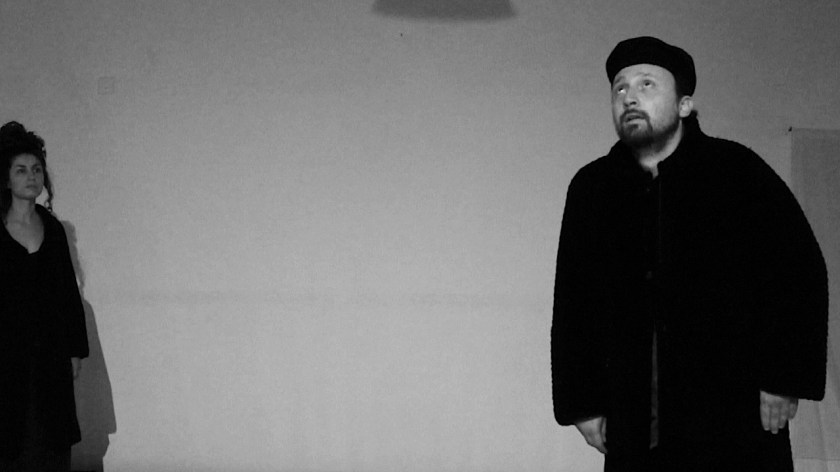
ANTIGONE… E D’UN COLPO UN URAGANO
[ANTIGO… AND SUDDENLY A HURRICANE]
2013/14
testo / text Antigone di / by Sofocle
laboratorio condotto da / workshop led by Anne Zénour
il lavoro è stato presentato nel luglio 2014 alla Corte dei Miracoli (Siena)
con / with Michela Biscosi, Roberta Ciccarelli, Giuseppe D’Antino, Cesare Galli, Matilde Manara, Virginia Marano, Eugenia Nicolaci, Marcin Piekalkiewicz, Andrea Traversi
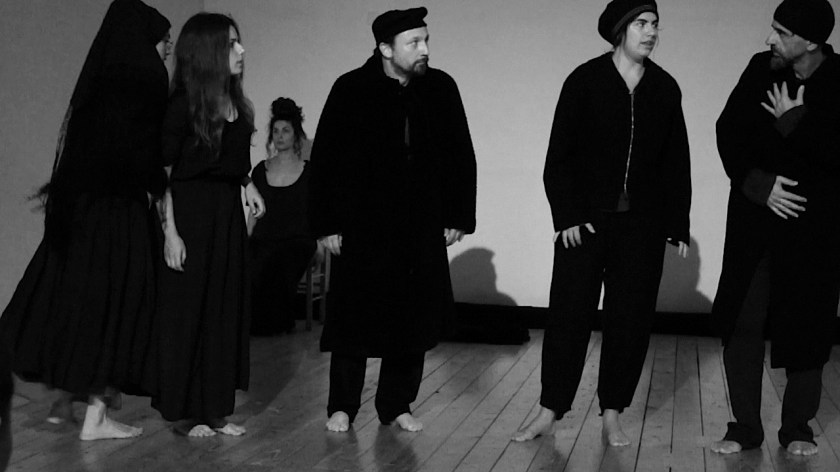
Andò così: quando mi allontanai
da te che minacciavi violenze
rimuovemmo la polvere dal morto
già in putrefazione e ci sedemmo
su un alto colle all’aria perché il puzzo
era forte. Si pattuì in caso di sonno,
di darci nelle costole coi gomiti.
E d’un colpo un uragano
solleva da terra un turbine di polvere :
è una sciagura che viene dal cielo
e invade la pianura, e strappa al bosco
tutt’intorno la chioma e così pieno
ne è il vasto etere che gli occhi
dovemmo socchiudere e sfregarceli proprio e allora
ci appare lei in piedi che piange con acuta
voce come un uccello si lamenta
al veder vuoto il nido senza i piccoli.
Così lei geme perché vede il morto nudo
e lo ricopre di nuovo di polvere
spargendola tre volte dalla brocca.
Subito noi accorriamo, l’afferiamo, lei
non sembra spaventata. La accusiamo
del presente misfatto e del passato.
Ma lei senza negar nulla ci sta davanti
amabile ed afflitta insieme.
Racconto della guardia da Antigone (traduzione Holderlin-Brecht)
It went like this: when I turned away
from you who threatened violence
we removed the dust from the dead
already rotting and we sat down
on a high hill in the air because the stench
was strong. It was agreed in case of sleep
to hit each other in the ribs with our elbows.
And suddenly a hurricane
lifts a whirlwind of dust from the ground :
it is a calamity that comes from the sky
and invades the plain, and tears the forest
all around the foliage, and so full
Is the vast ether of it that our eyes
we had to squint and rub our own, and then
Appears to us standing, crying with sharp
voice as a bird complains
at seeing the nest empty without its young.
So she moans because she sees the naked dead man
and covers him again with dust
scattering it three times from the pitcher.
Immediately we rush in, we grab her, she
does not seem afraid. We accuse her
Of the present misdeed and the past.
But she without denying anything stands before us
Amiable and afflicted together.
Tale of the guard from Antigo (Holderlin-Brecht translation)



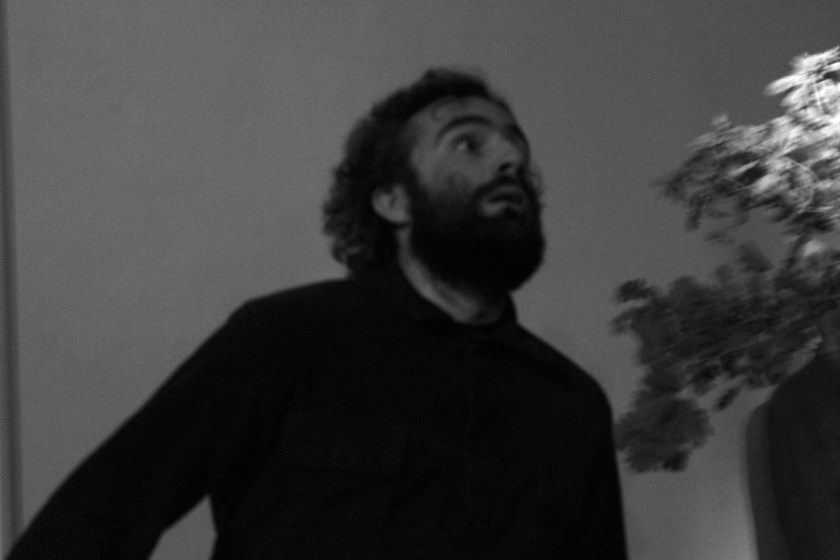
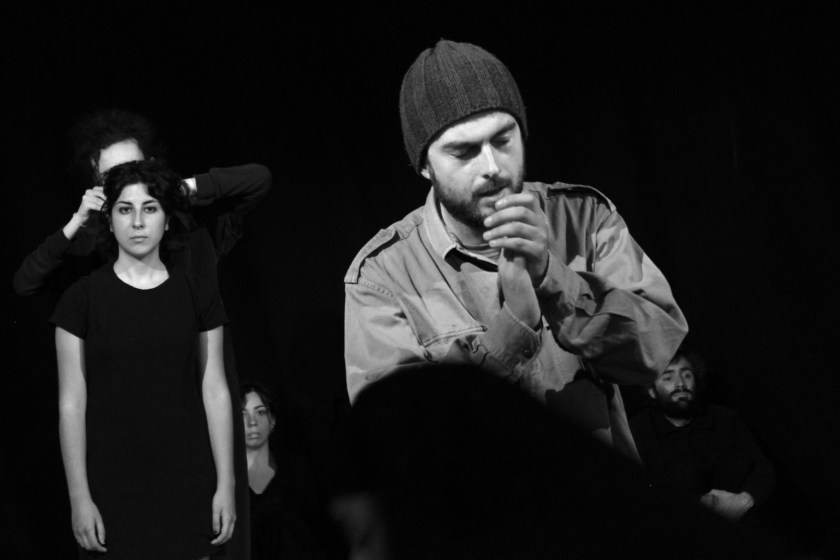
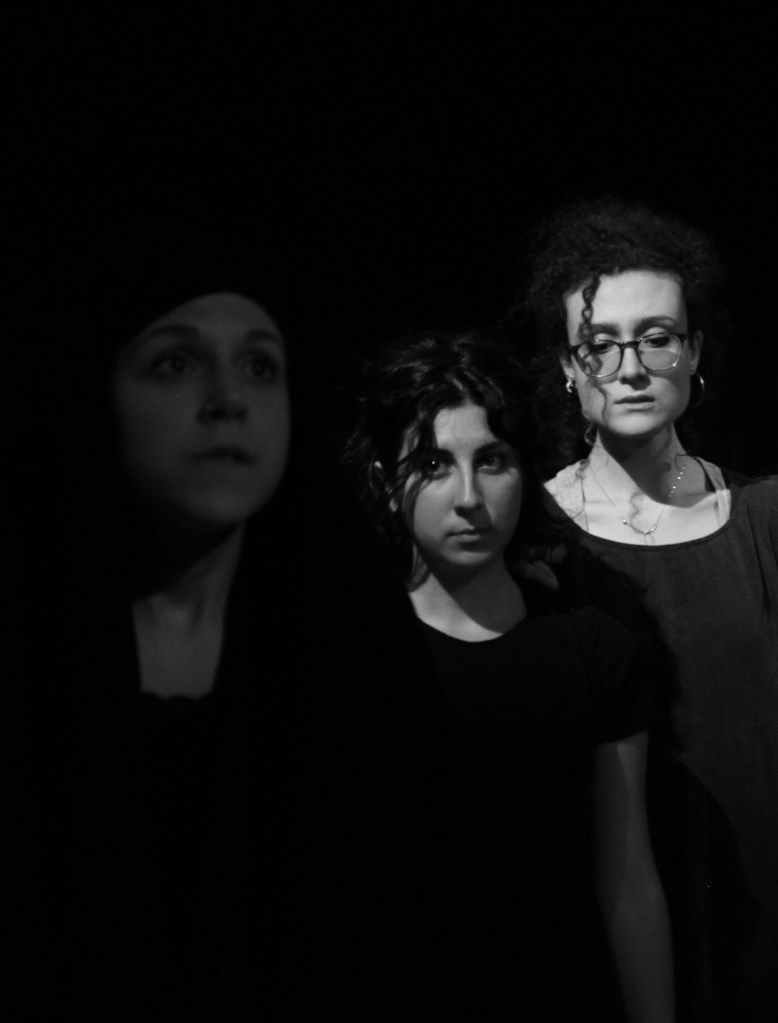

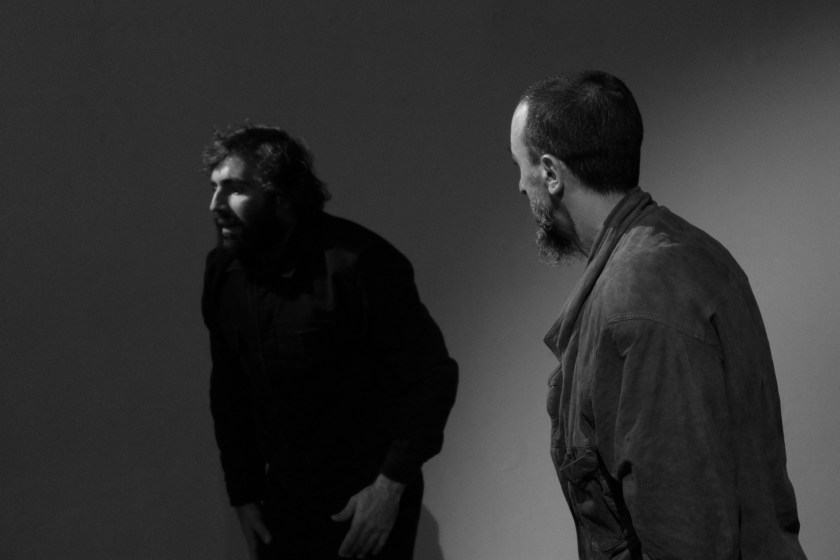
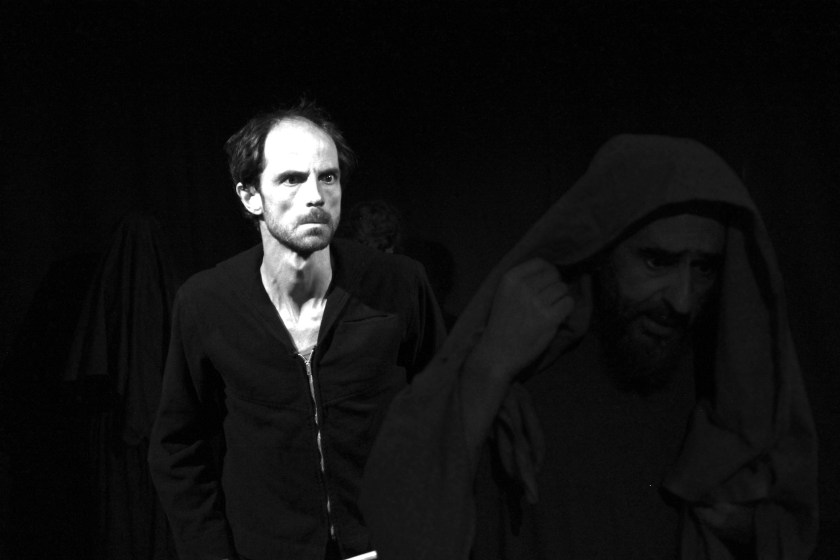
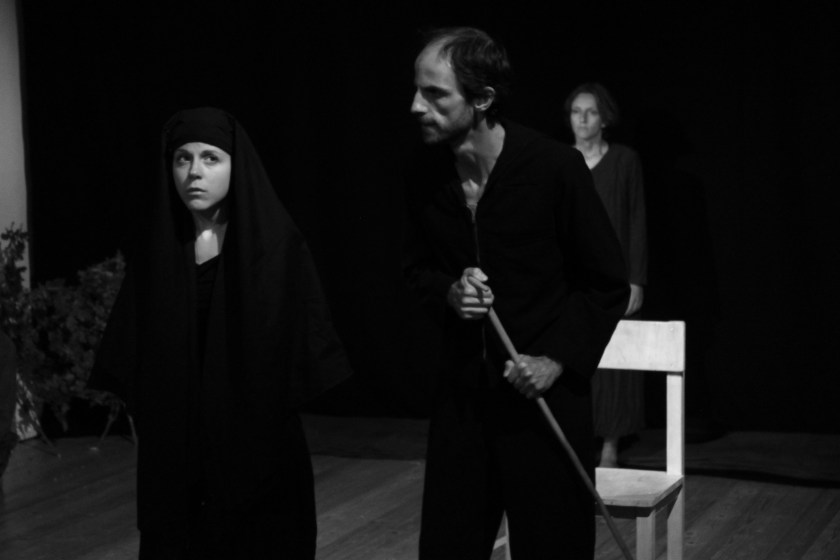

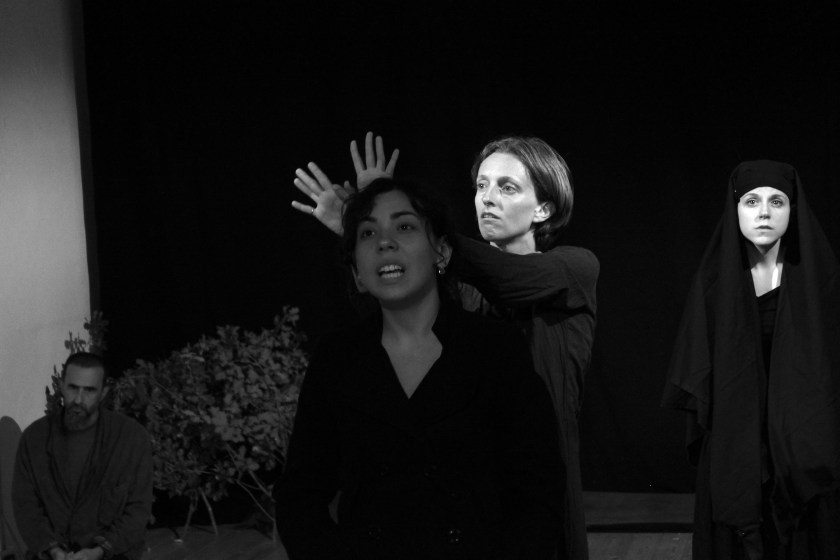
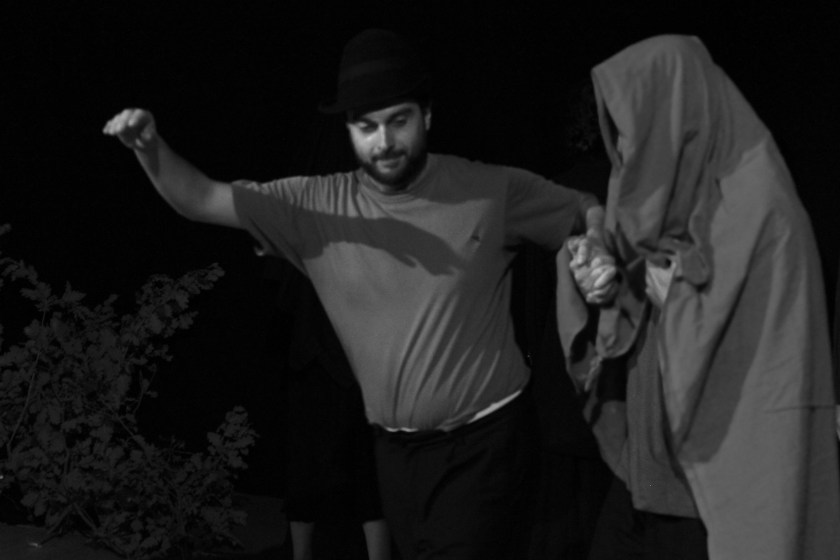
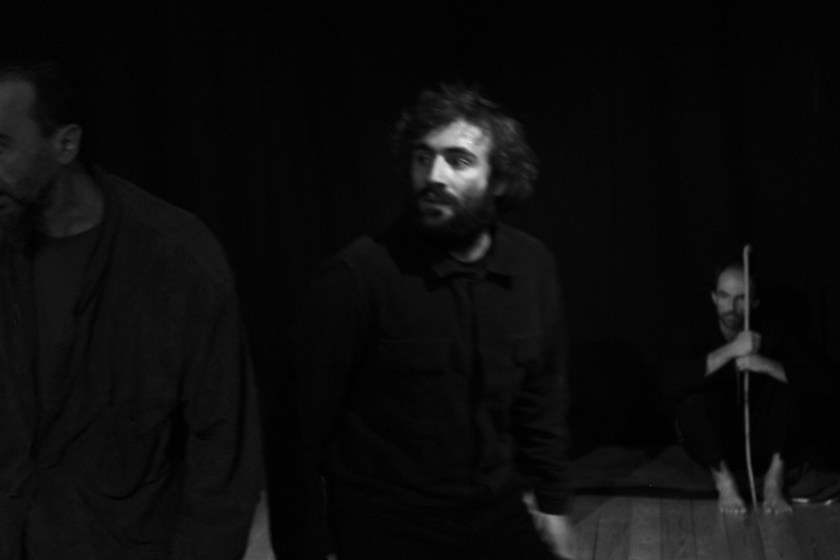
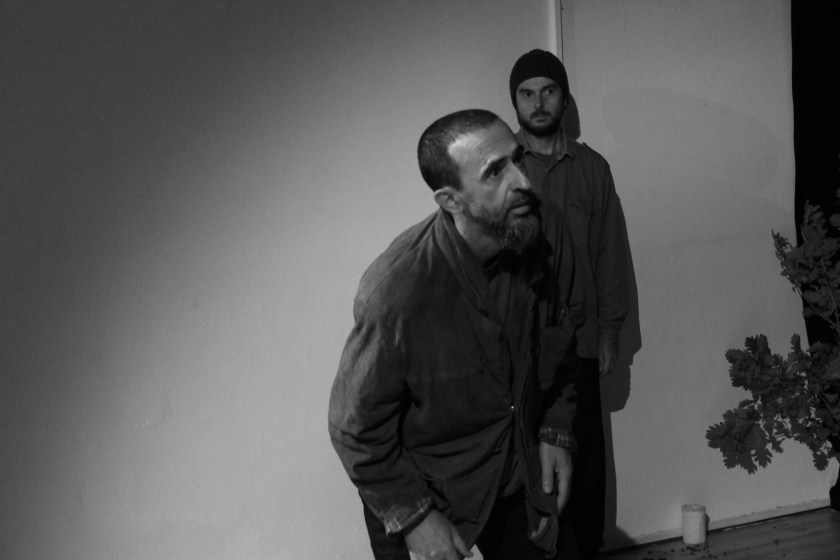


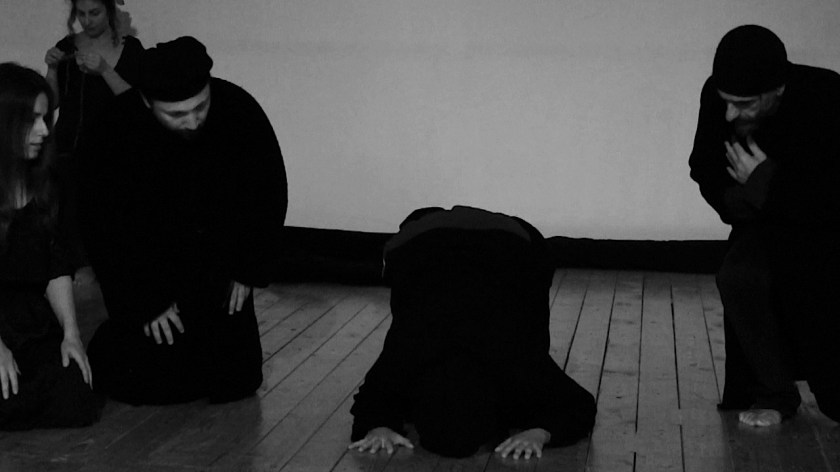

ATTRAVERSO I VILLAGGI seconda versione per 4 attori
[WALK ABOUT THE VILLAGES 2nd version for 4 actors]
2014/15
testo / text Attraverso i villaggi di / by Peter Handke
laboratorio condotto da / workshop led by Anne Zénour
il lavoro è stato presentato nel giugno 2015 alla Corte dei Miracoli (Siena)
con / with Ranieri Menicori, Eugenia Nicolaci, Giovanni Simiele, Andrea Traversi
E’ cresciuta la gioia di chi non sa parlare che per conoscere il proprio oscuro matrimonio con il cielo e le selve.
(Andrea Zanzotto)
Il cammino fin qui è stato molto lungo
The joy of those who can only speak to know their dark marriage with the sky and the woods has grown.
(Andrea Zanzotto)
The path so far has been very long
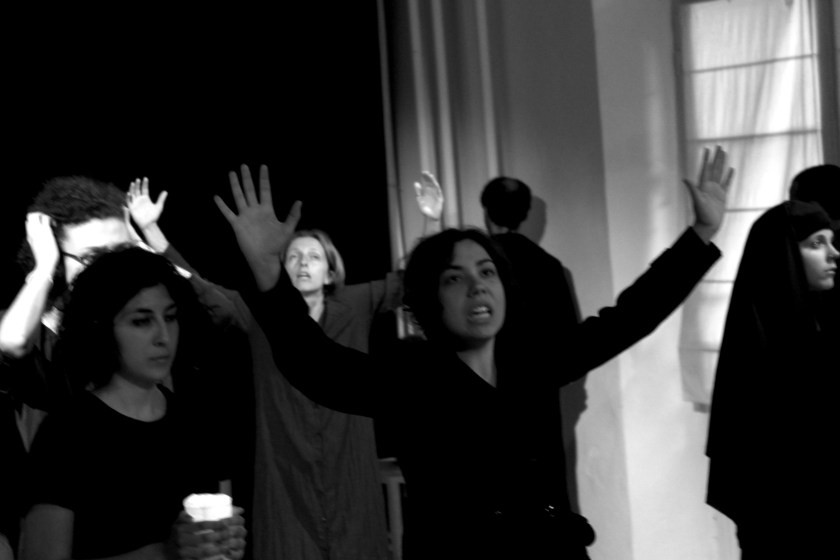
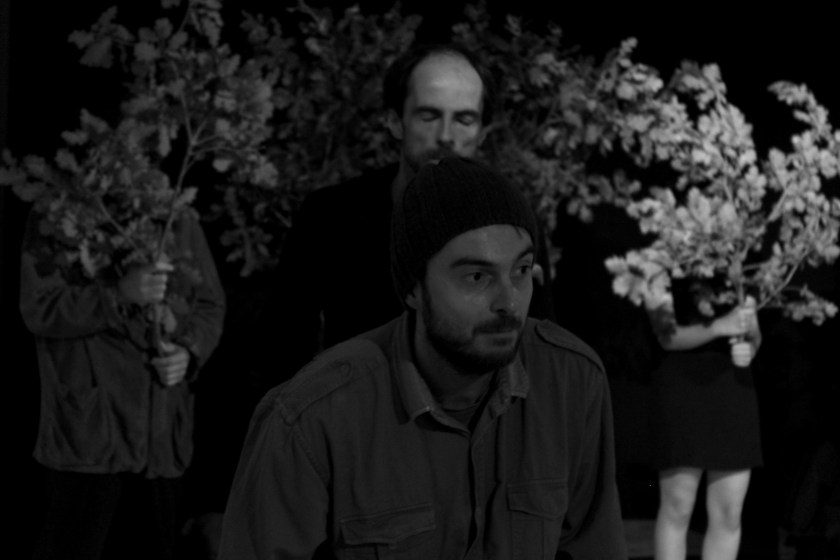
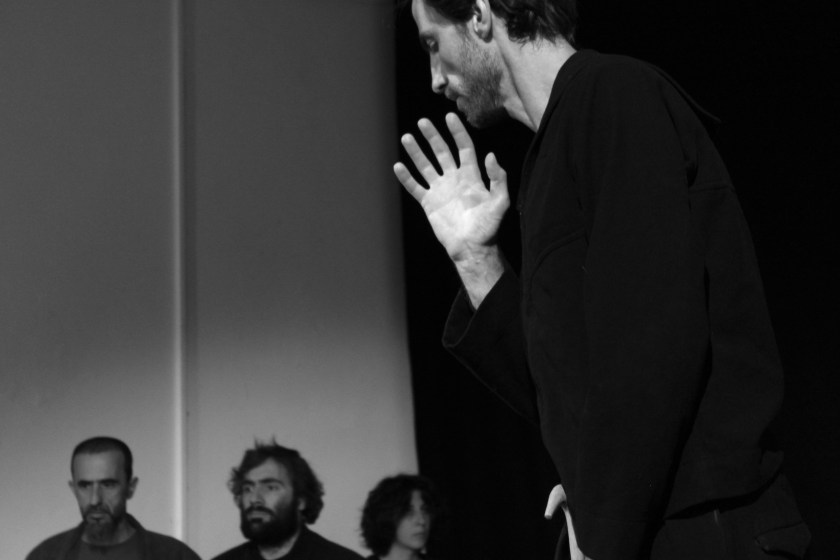
Un paese di montagna, un gruppo di operai edili venuti a lavorare temporaneamente su un cantiere, due fratelli e una sorella dalle relazioni difficili, originari del paese, e tre donne solitarie. Un testo dove ciascuno si espone davanti agli altri rivelando le sue sofferenze, le sue ribellioni o i suoi sogni attraverso dei monologhi e dei dialoghi .
I protagonisti sono tre fratelli:
uno, Gregor, ha studiato, è diventato scrittore e vive in città; l’altro, Hans, fa l’operai su un cantiere; Sophie, la sorella, è commessa in un negozio di vestiti.
Con loro ci sono:
– gli operai che lavorano con Hans.
– la gerente che tiene il bar e prepara la mensa per gli operai.
– una donna anziana.
– in disparte, ma poco a poco sempre più presente : Nova, specie di angelo annunciatore.
Tutto si svolge all’aperto, tutto è, in qualche modo, pubblico.
A mountain village, a group of construction workers who have come to work temporarily on a building site, two brothers and a sister with difficult relationships, originally from the village, and three lonely women. A text where each one exposes himself before the others, revealing his sufferings, his rebellions or his dreams through monologues and dialogues.
The protagonists are three brothers:
one, Gregor, is educated, has become a writer and lives in the city; the other, Hans, is a labourer on a building site; Sophie, the sister, is a shop assistant in a clothes shop.
With them are:
– the workers who work with Hans.
– the manager who keeps the bar and prepares the canteen for the workers.
– an elderly woman.
– in the background, but gradually becoming more and more present: Nova, a kind of announcing angel.
Everything takes place outdoors, everything is, in some way, public.
Chi è lui? E’ un enigma. E guai a te se dici chi è!
Guai a te se osi concludere chi siamo noi!
Who is he? He is an enigma. And woe to you if you say who he is! Woe to you if you dare conclude who we are!
Handke parlava di questo testo come di “una specie di canto”: un canto per avere il coraggio di ri-attraversare un passato doloroso, e di dire il tempo presente, un modo, forse, dopo questa attraversata piena di dolori e di poter “ metter fine al silenzio ricominciando a respirare e a aprire le braccia.”
Handke spoke of this text as “a kind of chant”: a chant to have the courage to re-cross a painful past, and to tell the present time, a way, perhaps, after this pain-filled crossing to be able to “end the silence by starting to breathe again and opening one’s arms.
LE TRE SORELLE
[THREE SISTERS]
2015/16
testo / text Le tre sorelle di / by Anton Cechov
laboratorio condotto da / workshop led by Anne Zénour
il lavoro è stato presentato nel giugno 2016 alla Corte dei Miracoli (Siena)
con / with Laura Del Matto, Giulia Gallesio, Matilde Manara, Sabrina Sereni, Giovanni Simiele, Paola Torre, Andrea Traversi

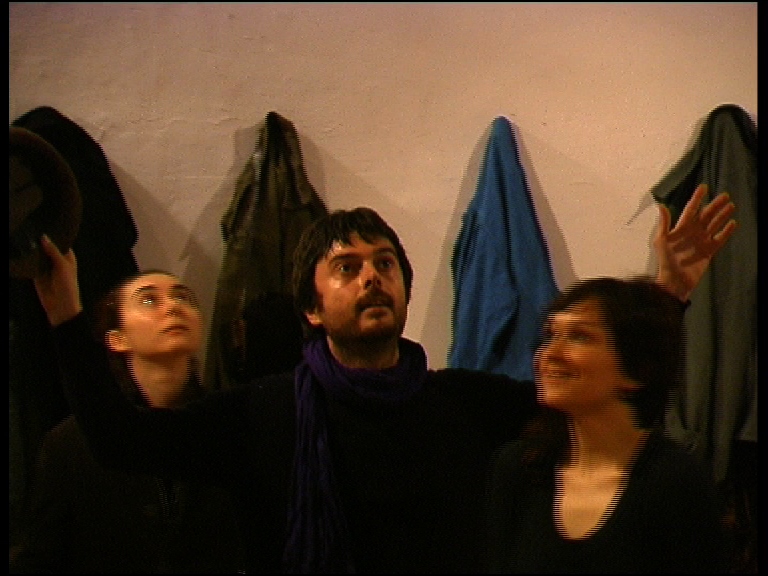
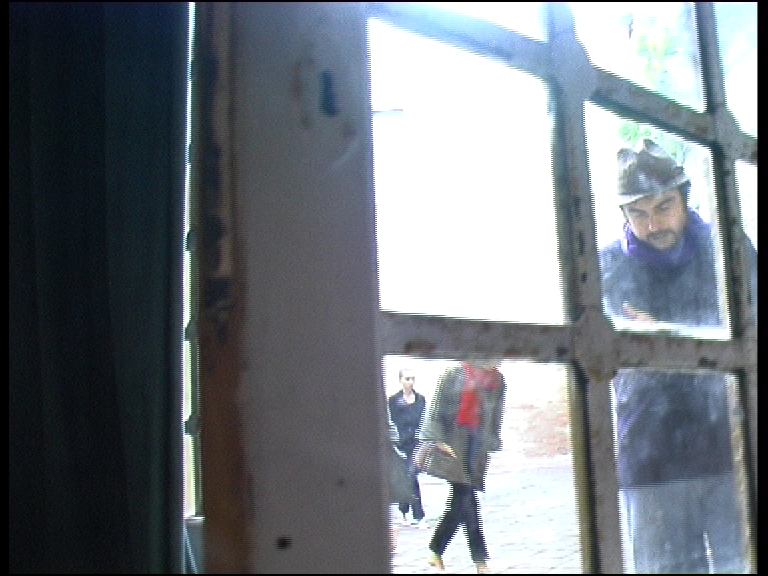
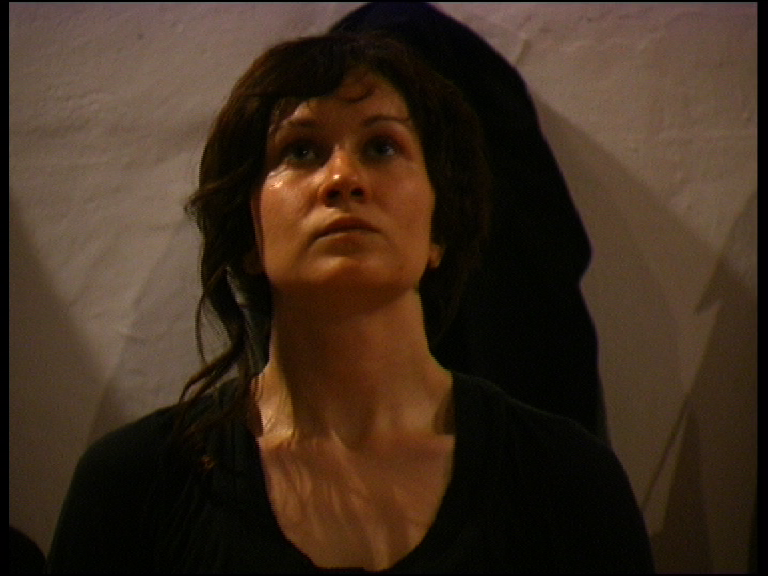

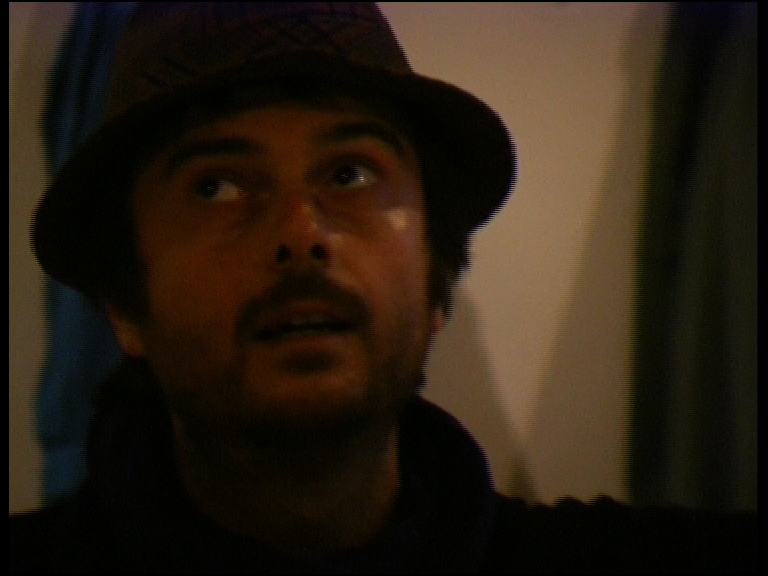

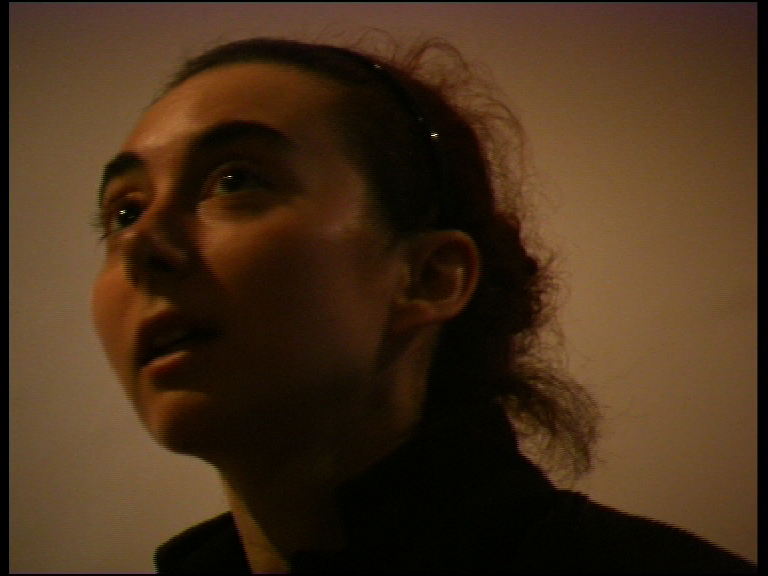

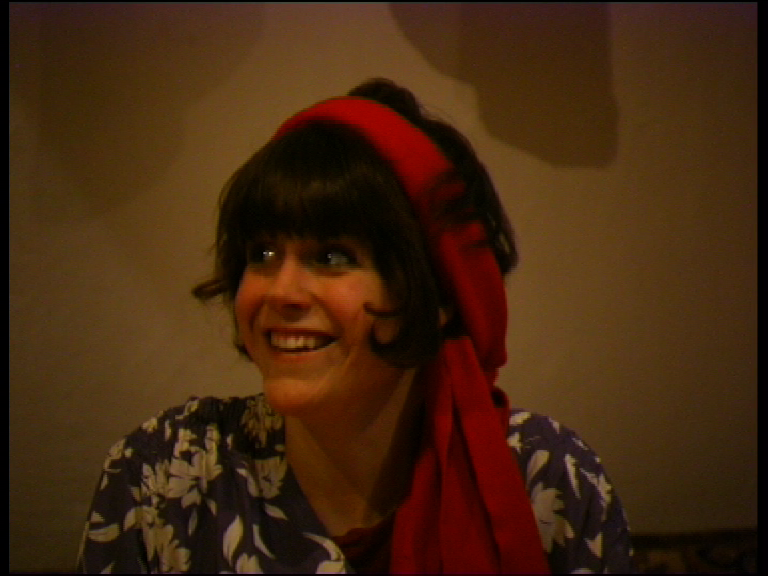
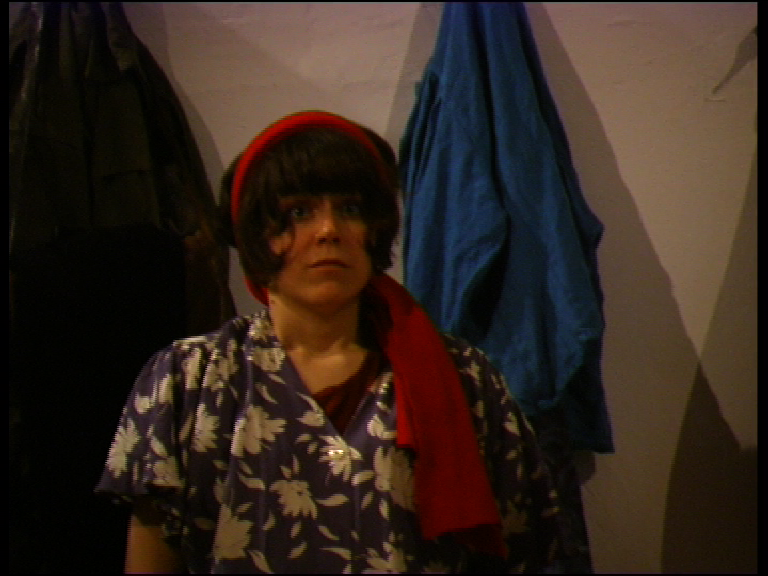
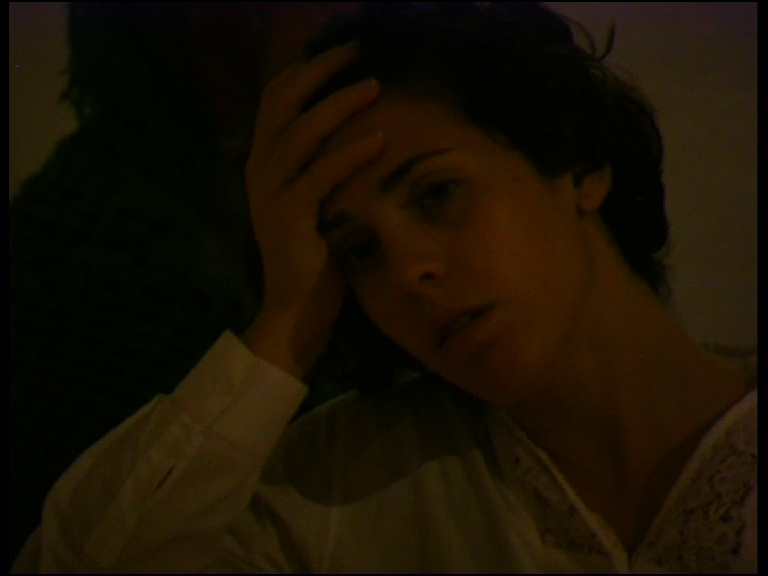
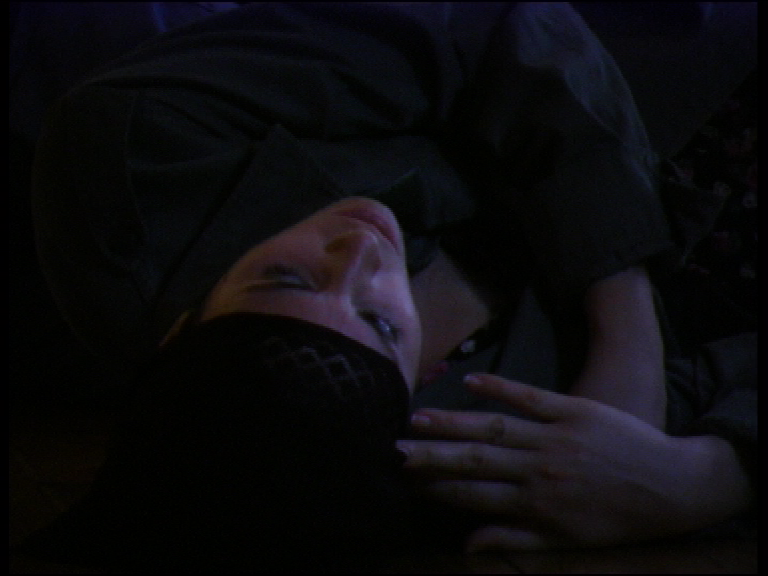
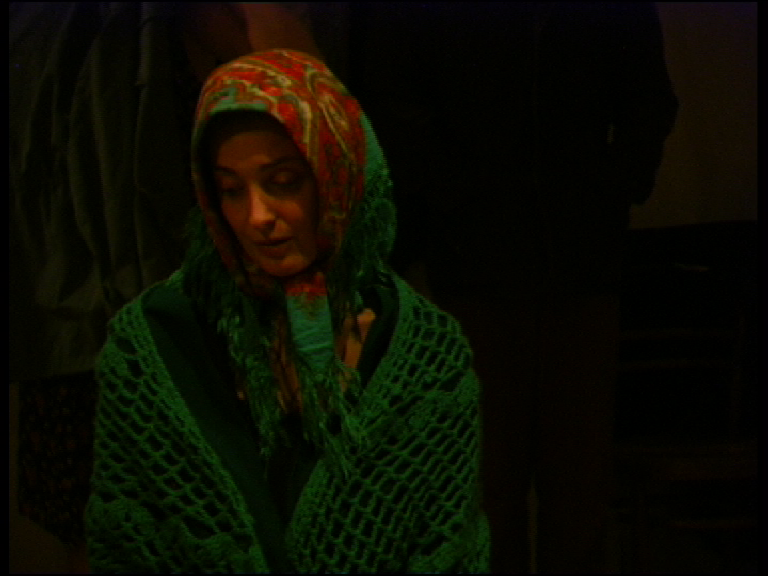
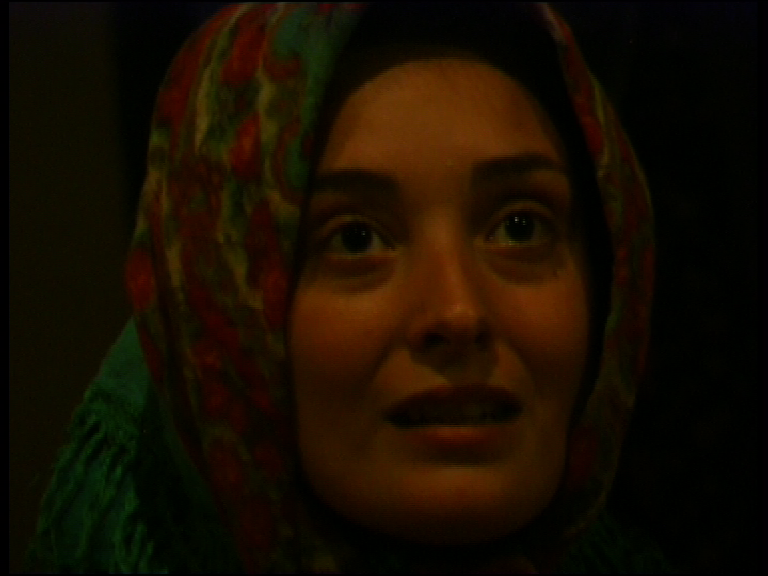
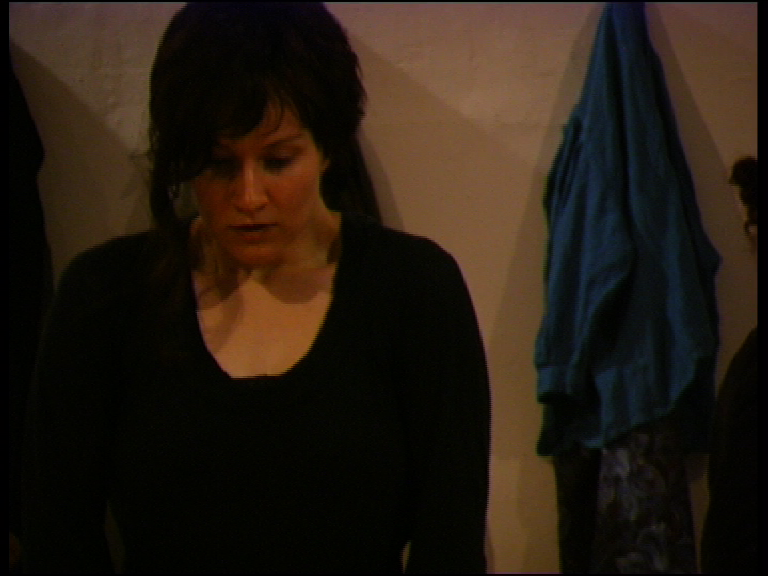


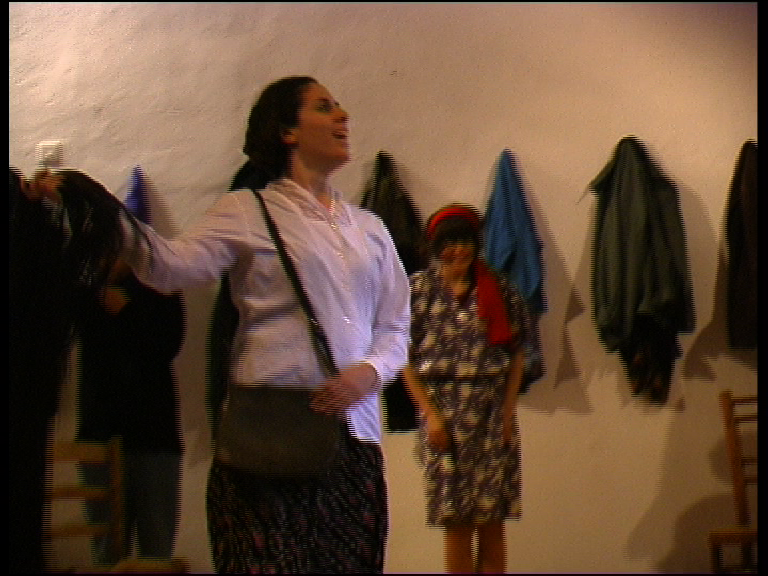

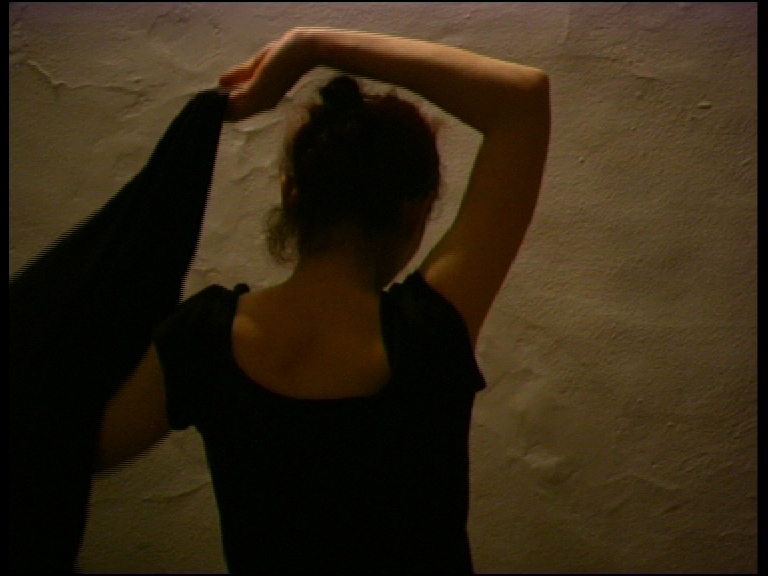
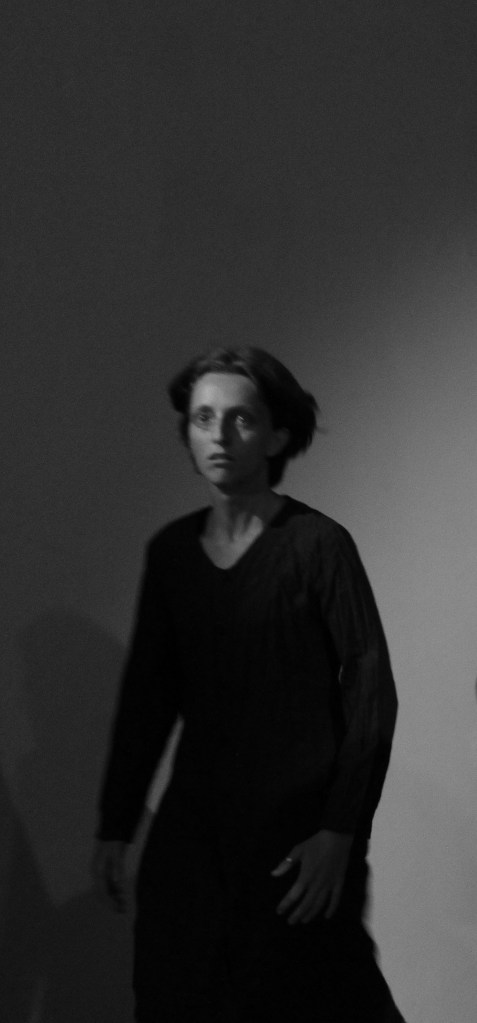
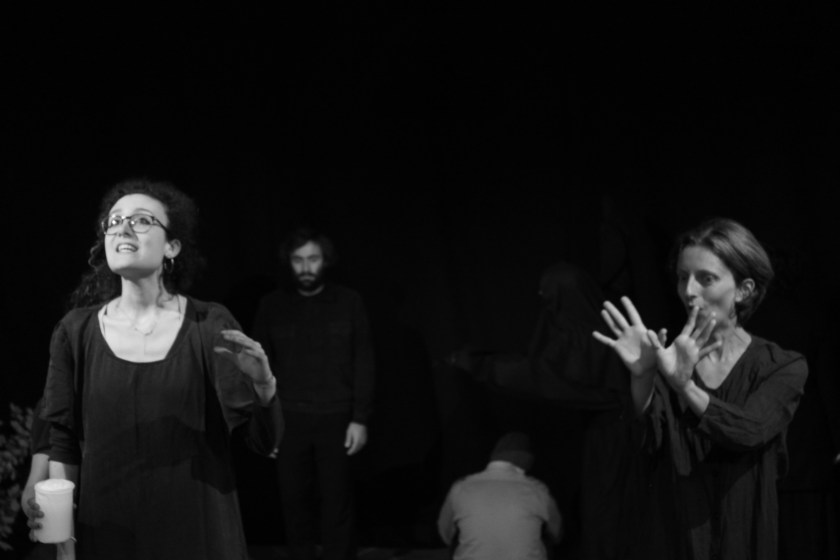
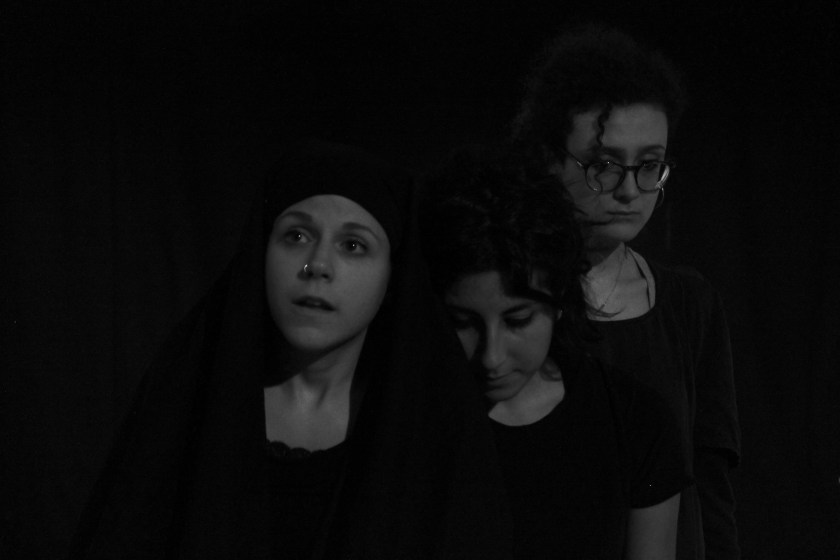
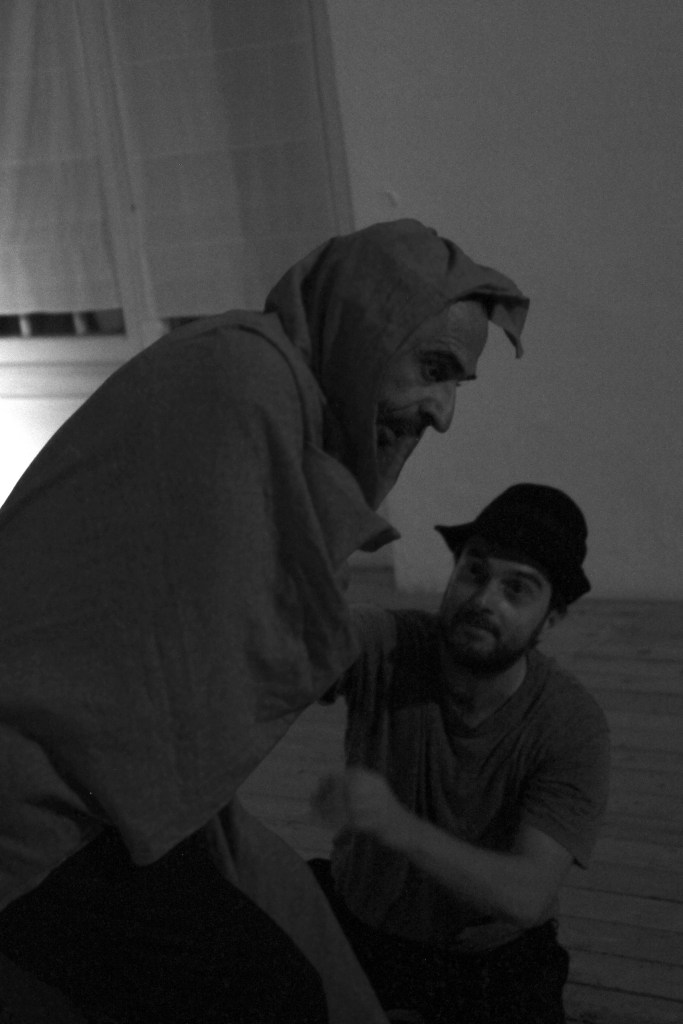
Tutti insieme si alzano – 3,4 sedie–alcuni sono in piedi o seduti a terra. Qualcosa di agitato, di confuso, due vogliono la stessa sedia, sono irrequieti, agitati e finiscono per sistemarsi molto vicino gli uni agli altri. Si guardano. Curiosità. Attrazione – cambiano posto – si osservano – uno si leva la giacca la rimette -uno ha freddo – attesa – impazienza. Pazienza – stanchezza – abbozzi di gesti verso l’uno o l’altro – uno fa come per andar via ed è tirato dentro da un altro.
Si alzano tutti cambiano posto e si rimettono giu.
Silenzio e immobilita’-tensione generale.
Serena comincia la canzone – poi un altro – è ripresa da altri- le parole e la melodia vengono fuori poco a poco.
Serena si alza fa due passi avanti apre la bocca, gesti a destra e a sinistra come per chiamare le parole.
Comincia.
All together they get up – 3,4 chairs – some are standing or sitting on the floor. Something is agitated, confused, two want the same chair, they are restless, agitated and end up sitting very close to each other. They look at each other. Curiosity. Attraction – they change places – they look at each other – one takes off his jacket- one puts it back on- one is cold- waiting- impatience. Patience – tiredness – hints of gestures towards one or the other – one makes as if to leave and is pulled in by another.
They all get up, change places and go back down.
Silence and stillness – general tension.
Serena begins the song – then another – and is repeated by others – the words and melody come out little by little.
Serena gets up, takes two steps forward, opens her mouth, gestures left and right as if to call out the words.
It begins.
STARE IN PIEDI NELL’INIZIO
[TO BE STANDING IN THE BEGINNING]
2016/17
testi di / texts by Samuel Beckett
laboratorio condotto da / workshop led by Anne Zénour
with / con Anna Lisa Castro, Laura Del Matto, Giulia Galasso, Giulia Pagliantini, Sara Paoletti, Lorenzo Schirru, Giovanni Simiele, Piero Usberti
Di fronte, di là dalla finestra, il vecchio muro di mattoni. È a lui che ci rivolgiamo, nel crepuscolo – quasi notte.
In front, beyond the window, the old brick wall. It is to him that we turn, in the twilight – almost night.
M’hanno detto: Ma è questo l’amore, ma sì ma sì, devi credermi, vedi bene che è facile.
M’hanno detto: Ma è questa l’amicizia, ma sì ma sì te l’assicuro, che vai ancora cercando.
M’hanno detto: Ecco fermati, alza la testa e guarda questo splendore. Quest’ordine!
M’hanno detto: Andiamo, non sei mica una bestia, pensa a queste cose e vedrai come tutto diventa chiaro. E semplice!
M’hanno detto: tutti quei feriti a morte, con quanta scienza li curano.
Io mi dico… qualche volta, Clov, bisogna che tu riesca a soffrire meglio di così, se vuoi che si stanchino di punirti… un giorno.
Mi dico… qualche volta, Clov, bisogna che tu sia presente meglio di così, se vuoi che ti lascino partire… un giorno.
[…]
Mi dico che la terra si è spenta, benché io non l’abbia mai vista accesa.
Quando cadrò, piangerò di gioia.
(Dal monologo di Clov, Finale di partita, S. Beckett)
They said to me, That’s love, yes, yes, not a doubt, now you see how easy it is.
They said to me, That’s friendship, yes, yes, no question, you’ve found it.
They said to me, Here’s the place, stop, raise your head and look at all that beauty. That order!
They said to me, Come now, you’re not a brute beast, think upon these things and you’ll see how all becomes clear. And simple! They said to me, What skilled attention they get, all these dying of their wounds.
I say to myself – sometimes, Clov, you must learn to suffer better than that if you want them to weary of punishing you – one day.
I say to myself – sometimes, Clov, you must be better than that if you want them to let you go – one day.
[…]
I say to myself that the earth is extinguished, though I never saw it lit. It’s easy going.
When I fall I’ll weep for happiness.
(From Clov’s monologue, Endgame, S. Beckett)
ATTRAVERSO I VILLAGGI
2017/18
testo / text Attraverso i villaggi di / by Peter Handke
laboratorio condotto da / workshop led by Anne Zénour
il lavoro è stato presentato nel giugno 2018 all’arci-centro (Siena)
con / with Valeria Capozzella, Giulia Pagliantini, Lorenzo Schirru, Andrea Traversi, Piero Usberti
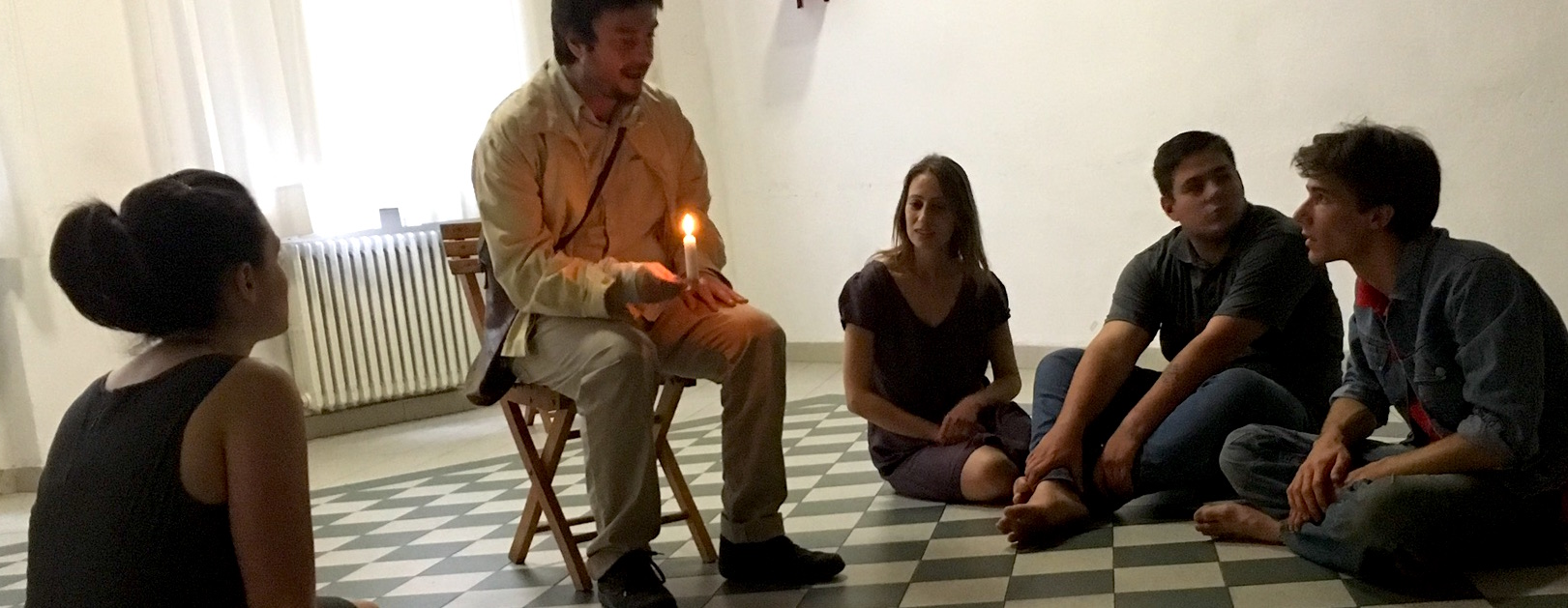
VORREI DIVENTARE COME UN ALTRO GIÀ FU
2018/19
testo / text Autodiffamazione di / by Peter Handke
laboratorio condotto da / workshop led by Anne Zénour
 TEATRO DELLA PIOGGIA